The Tipping Point: How Little Things Can Make a Big Difference
by Malcolm Gladwell
Why read this book
- It gives you a reusable framework — three named rules — for thinking about why some ideas spread and most don't, instead of treating virality as luck.
- The Connector/Maven/Salesman typology is a sticky way to think about your own network and who actually moves information or behavior through it.
- The Power of Context chapter is a genuinely useful corrective to the instinct to explain behavior purely through personality — small, fixable environmental details often matter more.
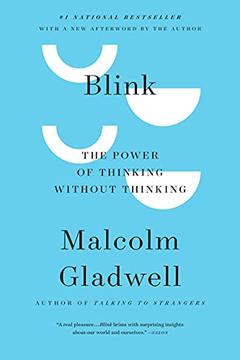
- It pairs with Blink, already on this site (see "Related" below) — Blink is about the speed of individual judgment, this book is about how judgments and behaviors propagate across a group.
In one sentence
Malcolm Gladwell's argument that ideas, products, and behaviors spread the way diseases do — through a small set of unusually connected people, a message engineered to stick, and an environment whose small details quietly shape whether it catches on.
Key takeaways
- Social epidemics follow three rules: the Law of the Few, the Stickiness Factor, and the Power of Context. Together they explain not just that something tips, but why it tips when and how it does.
- The Law of the Few says a small number of unusual people — not the message or the average person — do disproportionate work spreading an idea. Gladwell names three types: Connectors (people with unusually large, diverse networks), Mavens (information specialists who accumulate knowledge and want to share it), and Salesmen (people with the charisma and persuasive skill to move others to act).
- The Stickiness Factor is about the message itself: small, often counterintuitive changes to how information is presented can make it memorable and motivating rather than forgettable, independent of how widely it's broadcast.
- The Power of Context argues behavior is shaped more by immediate environment and circumstance than by fixed personality traits — change the physical or social setting and you can change the behavior, sometimes dramatically.
- The "broken windows" theory, applied to New York City's 1990s crime drop: visible small-scale disorder (broken windows, graffiti, fare-jumping) signals that no one is watching, which invites larger crime; fixing the small things first changed the context enough to bend the larger trend.
- The Bystander Effect — illustrated through the Kitty Genovese case as Gladwell tells it — shows context overriding individual character: people are less likely to help in an emergency the more other bystanders are present, because responsibility diffuses across the group rather than reflecting a lack of compassion in any one person.
- Hush Puppies' mid-1990s revival is Gladwell's case study in stickiness and the Few combined: a few influential, stylish kids in Manhattan and trendsetting designers picked the unfashionable shoe back up, and it spread outward from that small core rather than from a marketing campaign.
- The Rule of 150 (Dunbar's number) sets a ceiling on group cohesion: past roughly 150 people, a group loses the close ties and informal peer pressure that let information and norms spread efficiently, which is why organizations like W. L. Gore deliberately split units at that size.
Summary
The Tipping Point opens with a claim that sounds more like epidemiology than sociology: ideas, products, messages, and behaviors spread through a population the way a virus does, building slowly and then exploding once they cross a critical threshold — the tipping point. Gladwell's project is to take that biological metaphor seriously and extract the rules that govern when something tips.
The first rule, the Law of the Few, relocates the explanatory weight from the message to the messenger. Gladwell argues that a small set of unusual people carry a wildly disproportionate share of the work in spreading any social epidemic. Connectors are nodes with abnormally large and diverse social networks, the people who seem to know everyone across otherwise separate worlds. Mavens compulsively gather information and feel a need to pass it on, acting as trusted, disinterested experts. Salesmen supply the persuasive, often charismatic push that converts interest into action. The book's best-known case study, the revival of Hush Puppies in the mid-1990s, traces a near-dead shoe brand back to a handful of Manhattan kids and designers who started wearing the shoes ironically — a tiny cluster whose taste rippled outward through exactly this kind of social wiring.
The second rule, the Stickiness Factor, shifts attention to the message. Reach alone doesn't make something spread; it has to be memorable and motivating enough to change behavior once it lands. Gladwell illustrates this with research and tweaks behind Sesame Street and (its competitor-turned-case-study) Blue's Clues, where small, almost counterintuitive production choices — pacing, repetition, the blending of fantasy and reality — measurably changed how well children retained and acted on the content, independent of how many children watched.
The third rule, the Power of Context, is the book's most provocative claim: behavior is far more sensitive to immediate environment and circumstance than to fixed personality. Gladwell's two central illustrations are New York City's crime drop in the 1990s, which he ties to the broken windows theory — cleaning up visible disorder like graffiti and farebeating removed the environmental signal that invited bigger crime — and the Bystander Effect, where the presence of other people, not the character of any individual bystander, predicts whether someone intervenes in an emergency. Context, in other words, can swamp disposition.
The book closes by pulling these threads into a more general claim about group structure: that humans have a cognitive ceiling, the Rule of 150, on how many people they can hold in a genuinely social, mutually-monitoring relationship. Past that size, organizations lose the close-knit norms and peer pressure that let small, well-targeted changes ripple through the whole group — which is why Gladwell holds up companies that deliberately cap unit size as evidence the rule has practical teeth.
Reflections
The piece of this framework worth keeping is the relocation of "why things spread" away from the idea itself and onto the people carrying it. It's a useful corrective to the assumption that a good product or message spreads on its own merits — Gladwell's claim is that distribution runs through a small set of unusually wired people, which lines up with how word-of-mouth and early adoption actually seem to work in practice.
The Power of Context chapter is the most quietly radical part of the book: it argues against the instinct to explain behavior through character, and toward looking at the room, the incentives, and the small signals first. That said, the book's reputation has taken real hits since 2000 — the broken-windows-crime-drop link in particular is now contested by criminologists who point to other factors (lead exposure, policing changes, demographics) doing more of the work than Gladwell credited.
That doesn't void the framework, but it's a reminder to treat the three rules as a generative way of asking questions about why something is or isn't spreading, not as a proven causal model.
Next to Blink, the pairing is natural: Blink is the two-second judgment inside one head, The Tipping Point is what happens when many of those judgments cascade through a network. Worth reading idea-first, citation-skeptical.
“"The tipping point is that magic moment when an idea, trend, or social behavior crosses a threshold, tips, and spreads like wildfire."”
— Malcolm Gladwell
Who should read this
- Marketers, founders, and product people trying to understand why some launches catch fire and most don't, beyond "we need more reach."
- Anyone interested in social dynamics, urban policy, or behavior change who wants a framework bigger than individual willpower or talent.
- Readers who enjoyed Blink and want the social, group-level companion to that book's focus on individual snap judgment.
- Skip it if you want rigorous, replicated social science — several of the book's flagship cases (the NYC crime drop and broken windows in particular) have been seriously contested by later researchers, and the three-rules framework is a storytelling device more than a tested model.
Favorite quotes
- "The tipping point is that magic moment when an idea, trend, or social behavior crosses a threshold, tips, and spreads like wildfire."
- "Ideas and products and messages and behaviors spread like viruses do."
- "Six degrees of separation doesn't mean that everyone is linked to everyone else in just six steps. It means that a very small number of people are linked to everyone else in a few steps, and the rest of us are linked to the world through those special few."
- "If you want to bring a fundamental change in people's belief and behavior...you need to create a community around them, where those new beliefs can be practiced and expressed and nurtured."
FAQ
What are the three rules in The Tipping Point?
The Law of the Few (a small set of Connectors, Mavens, and Salesmen drive most spread), the Stickiness Factor (the message itself has to be memorable enough to change behavior), and the Power of Context (environment and circumstance shape behavior more than fixed personality does).
What is the Law of the Few?
Gladwell's claim that social epidemics depend disproportionately on a small number of unusual people: Connectors with unusually wide networks, Mavens who gather and share information, and Salesmen who persuade others to act.
What is the Power of Context in The Tipping Point?
The idea that behavior is shaped more by immediate environment and circumstance than by fixed character traits — illustrated with the broken windows theory of crime and the Bystander Effect, where context can override individual disposition.
What is the Rule of 150 / Dunbar's number?
A cognitive limit, drawn from Robin Dunbar's research, on roughly how many people a person can maintain genuine social relationships with at once. Gladwell argues groups beyond that size lose the cohesion needed to sustain a social epidemic internally.
How is The Tipping Point different from Blink?
Both are Gladwell, but Blink is about the speed and accuracy of individual snap judgment; The Tipping Point is about how ideas and behaviors propagate across a population. Read together they cover the individual and the social sides of rapid, non-deliberate decision-making.
Is The Tipping Point worth reading?
Yes for the vocabulary and framework — Connectors, Mavens, Stickiness, Power of Context are genuinely useful lenses. Read it as a thought-provoking starting point rather than settled science; some flagship examples, especially the NYC crime-drop case, have been challenged by later research.
Detailed Notes
Click to expand the full detailed notes →
Detailed Notes
Click to expand the full detailed notes →
- The core metaphor: ideas, products, messages, and behaviors spread through a population like a virus — slow accumulation followed by a sudden, threshold-crossing explosion: the tipping point.
- The Law of the Few: a small set of unusual people do most of the work of spreading an epidemic. Connectors (huge, diverse networks), Mavens (information specialists who accumulate and share knowledge), Salesmen (persuasive, charismatic closers).
- Hush Puppies revival: a near-dead shoe brand was picked back up in the mid-1990s by a small cluster of Manhattan kids and designers; the trend rippled outward from that core rather than from a marketing push — Gladwell's case study for the Law of the Few in action.
- The Stickiness Factor: reach isn't enough — the message has to be engineered to be memorable and behavior-changing. Illustrated through production research behind Sesame Street and Blue's Clues, where small changes in pacing and repetition measurably improved retention.
- The Power of Context: behavior responds more to immediate environment than to fixed personality. Two flagship illustrations: broken windows theory (visible small disorder invites larger crime; NYC's 1990s drop is Gladwell's case) and the Bystander Effect (more bystanders present, less likely any one intervenes — diffusion of responsibility, not lack of character).
- The Bystander Effect / Kitty Genovese: used to show that situational context, specifically the presence of other onlookers, can override individual compassion or character in predicting who helps in an emergency.
- The Rule of 150 (Dunbar's number): roughly 150 is the cognitive ceiling on genuine social relationships a person can sustain; organizations (W. L. Gore is Gladwell's example) deliberately cap group size near there to preserve the close ties and peer pressure that let norms and information spread internally.
- Caveat worth noting: several of the book's central examples, especially the NYC crime-drop/broken-windows link, have been challenged by subsequent criminology research — treat the three-rules framework as a useful lens, not a settled causal theory.
- Related on this site: see the Blink note for Gladwell's companion argument about the speed and accuracy of individual snap judgment — Blink is the individual-decision half of rapid cognition, The Tipping Point is the social-spread half.
- Anchor quote: "The tipping point is that magic moment when an idea, trend, or social behavior crosses a threshold, tips, and spreads like wildfire."