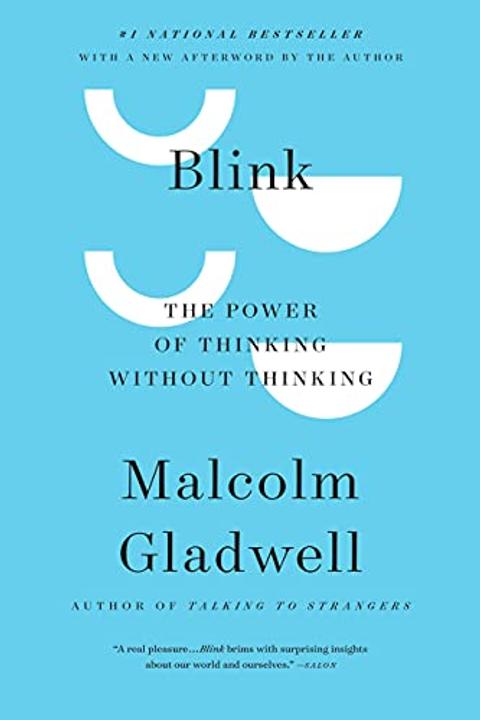
Blink: The Power of Thinking Without Thinking
by Malcolm Gladwell
Why read this book
- It makes a counterintuitive case worth wrestling with: that fast, unconscious judgment is a real form of intelligence, not just a source of error.
- "Thin-slicing" is a sticky, reusable mental model for how experts read a situation from a tiny amount of information.
- It's honest about the dark side — the same machinery that lets an expert spot a forgery in two seconds also produces snap prejudice — so it's not a simple "trust your gut" pep talk.
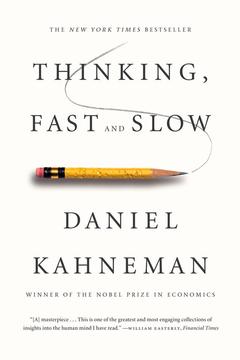
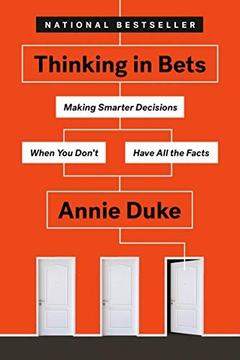
- It pairs naturally with the rest of the decision-making cluster (Thinking, Fast and Slow; Thinking in Bets), giving you the intuition-friendly counterweight to the "slow down and reason" school.
In one sentence
Malcolm Gladwell's argument that the snap judgments our unconscious makes in the first few seconds can be as accurate as careful analysis — and sometimes more so — but that the same fast machinery misfires in predictable ways when bias, stress, or surface impressions hijack it.
Key takeaways
- Thin-slicing is the core idea: the adaptive unconscious can find patterns and reach sound conclusions from very narrow slices of experience, often in seconds, without conscious deliberation.
- The adaptive unconscious is a giant, fast computer running behind the scenes. It's not the Freudian unconscious of repressed desire — it's a decision-making engine that sizes up situations and acts before the conscious mind catches up.
- Fast can beat slow. Gottman's marriage predictions and the Getty kouros experts show that a trained snap judgment sometimes outperforms exhaustive analysis — and that piling on more information can actively degrade the decision.
- Snap judgments misfire predictably. The Warren Harding error shows how thin-slicing gets hijacked by surface impressions and bias: we read "looks presidential" as "is competent" and get it badly wrong.
- Expertise sharpens the slice. Snap judgment isn't magic — it's trained. Experienced people read thin slices well because experience has tuned their unconscious; novices reading the same slice get noise.
- Reading faces is reading minds. Paul Ekman's work on micro-expressions shows emotion leaks onto the face involuntarily in fractions of a second, which is part of how we thin-slice other people — and why stress that blocks this reading is dangerous.
- We can't always explain our snap judgments. The Getty experts "knew" the statue was wrong before they could say why. The verbalized reason often arrives after the unconscious has already decided.
- The fast system can be educated and protected. First impressions aren't fixed; you can change the conditions and inputs that shape them, which is the practical hope underneath the warnings.
Summary
Blink argues that the decisions we make in the first two seconds — fast, automatic, barely conscious — deserve more respect than we give them. Gladwell calls the underlying machinery the adaptive unconscious: a rapid pattern-finding engine that sizes up a situation from a "thin slice" of information. His opening case is the Getty kouros, a Greek statue the museum bought as authentic after fourteen months of scientific testing. Several art experts felt a flash of "intuitive repulsion" the moment they saw it — something was wrong — long before anyone could articulate the evidence that it was likely a forgery. Two seconds beat fourteen months.
Much of the book is a parade of cases where rapid cognition works. Psychologist John Gottman can thin-slice a short clip of a couple arguing and predict divorce with startling accuracy. Speed-dating shows people forming durable judgments in minutes, often on criteria that contradict what they claimed to want. The recurring lesson is that more information is not always better; beyond a point, deliberation adds noise and false confidence rather than accuracy. Trained intuition, fed the right thin slice, can be remarkably good.
Then Gladwell turns the argument on its head and spends the back half on how the same machinery betrays us. The Warren Harding error is his name for thin-slicing gone wrong: Harding looked so distinguished and presidential that people read competence into a man who had none, and the country got one of its worst presidents. This is snap judgment captured by bias and surface impression. Market research is another failure mode — the Pepsi Challenge's sip test favored sweeter Pepsi and helped push Coca-Cola into the New Coke disaster, because a single sip and a whole bottle are different experiences, and people often can't report what they actually prefer. The book's darkest case is the 1999 Amadou Diallo shooting, where four officers fired forty-one shots at an unarmed man in a doorway. Gladwell frames it as mind-reading collapsing under extreme stress: arousal narrows perception until the fast system can no longer read a face or a situation correctly, and catastrophic misjudgment follows.
The synthesis is not "trust your gut" and not "always slow down." It's that rapid cognition is a real and trainable faculty that is brilliant under some conditions and disastrous under others. The work is in knowing which is which — protecting the conditions where snap judgment shines (expertise, the right thin slice, low arousal) and guarding against the conditions where it fails (surface bias, information overload, panic). Gladwell's most hopeful claim is that first impressions can be educated and managed; they bubble up automatically, but automatic is not the same as uncontrollable.
Reflections
The idea worth keeping is that intuition is a trainable faculty, not a mystical one — the Getty experts' two-second "no" was decades of looking at statues compressed into a flash. That reframes "trust your gut" from a personality trait into something closer to a skill, which is more useful.
What makes Blink hold up better than a typical "follow your instincts" book is that it spends half its pages on how the same machinery fails: the Warren Harding error and the Diallo shooting are both thin-slicing, just pointed at the wrong inputs or running under too much stress. So the honest takeaway isn't gut-versus-analysis; it's matching the mode to the conditions.
This is where it slots cleanly next to Thinking, Fast and Slow — Kahneman documents how System 1 misleads, Gladwell argues System 1 is also where real expertise lives, and the truth is that both are describing the same fast system from opposite ends. And it pairs with Thinking in Bets on the meta-skill of knowing when your confidence is earned.
The book's real weakness is the one critics name: it's a wonderful collection of stories in search of a falsifiable theory, and the "when to trust your gut" question — the one that actually matters — gets gestured at more than answered.
“"There can be as much value in the blink of an eye as in months of rational analysis."”
— Malcolm Gladwell
Who should read this
- Anyone interested in decision-making and judgment who wants the intuition-friendly counterpart to Kahneman's "slow down and reason" message.
- People in roles built on reading others quickly — interviewers, negotiators, clinicians, anyone who forms fast impressions and wants to know when to trust them.
- Readers who like Gladwell's case-driven storytelling and want a sticky vocabulary (thin-slicing, the Warren Harding error) for talking about gut judgment.
- Skip it if you want rigorous, falsifiable psychology; the book is criticized for cherry-picking vivid anecdotes over a clean theory, and the core idea fits in a long essay.
Favorite quotes
- "There can be as much value in the blink of an eye as in months of rational analysis."
- "decisions made very quickly can be every bit as good as decisions made cautiously and deliberately."
- "We are not helpless in the face of our first impressions. They may bubble up from the unconscious — from behind a locked door inside of our brain — but just because something is outside of awareness doesn't mean it's outside of control."
- "The key to good decision making is not knowledge. It is understanding. We are swimming in the former. We are desperately lacking in the latter."
FAQ
What is thin-slicing in Blink?
It's Gladwell's term for the adaptive unconscious's ability to find patterns and reach a sound conclusion from a very narrow slice of experience — sizing up a person or situation in seconds, without conscious deliberation.
What is the main idea of Blink?
That the rapid, unconscious judgments we make in the first few seconds can be as accurate as careful analysis, but that the same fast machinery misfires in predictable ways when bias, surface impressions, or stress distort it.
What is the Warren Harding error?
Gladwell's name for thin-slicing gone wrong: Harding looked so distinguished that people read competence and leadership into him, electing a man who turned out to be a poor president. It's a snap judgment hijacked by surface appearance and bias.
What is the Getty kouros example?
A Greek statue the Getty Museum bought after fourteen months of scientific testing concluded it was authentic. Several experts felt instantly that it was wrong — a forgery — before they could explain why, illustrating how a two-second judgment can beat exhaustive analysis.
What does the Pepsi Challenge teach in Blink?
That market research can mislead: the sip-test format favored sweeter Pepsi and helped push Coca-Cola into the New Coke fiasco, because a single sip differs from drinking a whole can, and people often can't accurately report what they truly prefer.
Is Blink worth reading?
Yes if you want an engaging, case-driven look at gut judgment and a vocabulary for it. It's weaker as rigorous science — critics note it leans on vivid anecdotes — so read it for the framing, not as settled psychology.
Detailed Notes
Click to expand the full detailed notes →
Detailed Notes
Click to expand the full detailed notes →
- Thin-slicing: the adaptive unconscious's ability to find patterns and reach conclusions from very narrow slices of experience. Fast, automatic, and often as good as — sometimes better than — deliberate analysis.
- The adaptive unconscious: a fast, behind-the-scenes decision engine that sizes up situations and acts before the conscious mind weighs in. Not the Freudian unconscious — a working computer, not a repository of repressed desire.
- The Getty kouros: the museum bought a Greek statue as authentic after fourteen months of testing; experts felt instant "intuitive repulsion" that it was a forgery before they could explain why. Two seconds beat exhaustive analysis.
- Gottman's marriages / speed-dating: Gottman thin-slices short clips of couples to predict divorce with ~90% accuracy; speed-dating shows durable judgments formed in minutes, often contradicting people's stated preferences. More information isn't always better.
- The Warren Harding error: thin-slicing hijacked by surface impression and bias. Harding "looked presidential," so people read competence into him and elected a poor president. The failure mode of snap judgment.
- Paul Ekman & micro-expressions: emotion leaks onto the face involuntarily in fractions of a second (the Facial Action Coding System). Reading faces is part of how we thin-slice people — and why blocking that reading is dangerous.
- The Pepsi Challenge / market research: the sip test favored sweeter Pepsi and helped drive the New Coke disaster; the Aeron chair tested badly yet became a hit. People often can't report what they actually prefer, so surface research misleads.
- The Amadou Diallo shooting (1999): four officers fired forty-one shots at an unarmed man. Gladwell frames it as mind-reading collapsing under extreme arousal — stress narrows perception until the fast system can no longer read the situation, and catastrophe follows.
- When to trust the gut: snap judgment shines with expertise, the right thin slice, and low arousal; it fails under surface bias, information overload, and panic. First impressions can be educated and protected, not just endured.
- Anchor quote: "There can be as much value in the blink of an eye as in months of rational analysis."