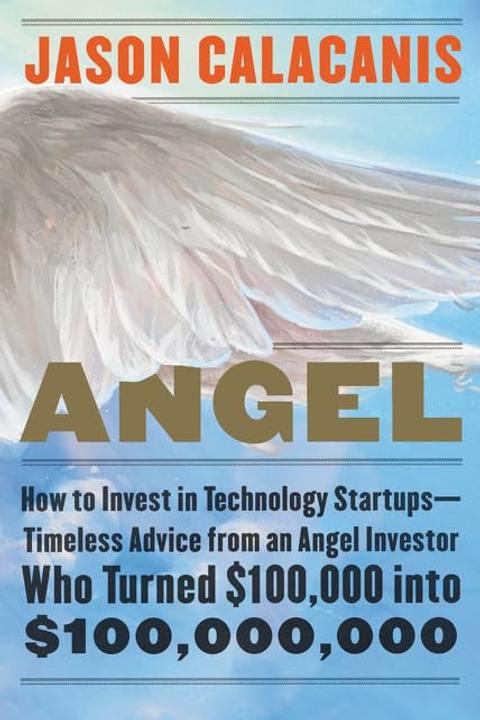
Angel: How to Invest in Technology Startups
by Jason Calacanis
Why read this book
- It's written by a practitioner with a real, verifiable track record (an early investor in Uber, Robinhood, Thumbtack, and Wealthfront), not a theorist.
- The power-law framing resets expectations correctly before you make a single investment: most deals will return little or nothing, and that's normal, not a sign you're doing it wrong.
- The founder-evaluation material (the questions he asks, the traits he looks for) is concrete enough to actually use in a first meeting.
- It's honest about the asymmetry of angel investing: small checks, long odds, occasional enormous payoffs, and it doesn't pretend the math works out for everyone.
In one sentence
Jason Calacanis's field manual for angel investing, built from his own track record as an early Uber and Robinhood investor, arguing that outsized returns come from volume, founder evaluation, and access to deal flow rather than from picking the "best" idea.
Key takeaways
- Returns follow a power law. A small number of deals produce nearly all the return in any angel's portfolio; the rest cluster around zero or a small loss. The implication is that surviving long enough to land your one or two outliers matters more than any individual pick.
- Bet on the founder, not the idea. Calacanis is explicit that most startup ideas pivot at least once, so he's evaluating whether the person in front of him can adapt, recruit, and grind through failure, not whether the current pitch is correct.
- Deal flow is the real bottleneck. Good investors aren't necessarily better at picking; they see more and better deals. Building a reputation and a network that routes founders to you is most of the job.
- Volume matters. Because so much of the return concentrates in a handful of outliers, and you can't reliably predict which ones in advance, angels need enough at-bats (Calacanis suggests dozens of investments over several years) to have a realistic shot at catching one.
- Check size and portfolio construction are a discipline, not a feeling. Sizing each bet small enough that a loss doesn't sting, while writing enough checks to get statistical exposure to the power law, is the structural fix for an inherently long-shot game.
- Valuation matters less than people think at the earliest stage. Overpaying slightly for a great founder is a smaller risk than getting a great price on a mediocre one; the spread in outcomes dwarfs the spread in entry price.
- Green flags: founders who are obsessive, resilient, and slightly "unmanageable" in their conviction. Red flags: founders who fold under pushback, can't recruit, or are chasing the idea instead of the mission.
- Most angels lose money, largely because they don't write enough checks, don't get access to the best deals, or panic and stop investing right before their portfolio would have caught its outlier.
Summary
Angel is Jason Calacanis's attempt to turn his own angel-investing track record, built on early checks into Uber, Robinhood, Thumbtack, and Wealthfront, into a repeatable playbook. The book opens with the math that should anchor any angel's expectations: returns in this asset class follow a power law. Most investments return nothing or close to it; a small handful return enormously; and the entire portfolio's performance is dominated by whichever one or two deals turn into outliers. Calacanis's claim is blunt: if you removed the top few winners from almost any angel's portfolio, the rest would look mediocre. The job, then, isn't to be right about every deal, it's to get enough credible shots at the outlier and not get knocked out of the game before one hits.
That framing drives the rest of the book's advice. Because picking winners in advance is unreliable, Calacanis spends much of the book on evaluating founders rather than ideas, on the logic that ideas pivot constantly while founder traits (resilience, recruiting ability, obsessiveness, the willingness to be "unmanageable" in pursuit of a vision) are comparatively stable and predictive. He's candid that the founder, not the product, is what he's actually underwriting in a first meeting.
The second major thread is deal flow: the unglamorous truth that most of the edge in angel investing comes from seeing better deals earlier, not from being a sharper evaluator of the deals everyone already sees. Calacanis describes how reputation, founder referrals, and being useful to portfolio companies compound into better access over time, and argues this is a bigger lever than analytical skill for most angels.
The practical chapters cover check sizing, portfolio construction, and basic early-stage deal terms, all oriented around the same power-law logic: write enough checks, size them so a loss doesn't change your behavior, and don't over-optimize valuation at the expense of getting into the deal at all. The book closes by being honest about the downside case. Most people who try angel investing lose money, usually because they under-invest in volume, lack access to quality deal flow, or quit after a string of zeros instead of staying in long enough to catch an outlier.
Reflections
The part of this book that's most useful isn't the investing math, it's the founder-evaluation lens, because it's really a lens on conviction and resilience that applies beyond fundraising. The power-law framing is the right mental model to walk in with: expecting most bets to return nothing isn't pessimism, it's just an accurate description of the distribution, and treating any individual loss as a referendum on your judgment is a mistake.
The deal-flow point is the one people skip past too fast. It's tempting to think the edge in this game is analytical, picking the right company, when Calacanis's own story suggests the edge is mostly about which table you're sitting at when the good deals show up.
The founder-over-idea framing also cuts both ways if you're the one raising: it's a reminder that how you handle pressure and pivots is being underwritten as much as the current pitch is.
“"The number one reason a startup fails is that the founder gives up."”
— Jason Calacanis
Who should read this
- Founders who want to understand how the investors across the table are actually thinking about risk, evaluation, and portfolio math.
- Early-stage operators and engineers who are starting to angel invest with their own capital and need a realistic framework before writing checks.
- Anyone evaluating whether to get into angel investing at all; the book is upfront about the odds and the volume required to make the math work.
- Skip it if you're looking for technical or financial-statement diligence methods; this is a founder-evaluation and deal-flow book, not a valuation-modeling one.
Favorite quotes
- "The number one reason a startup fails is that the founder gives up."
- "I don't need to know if your idea is going to succeed, I need to know if you are."
- "You can make your own luck in this life by putting yourself next to the people who are already winning."
- "Your job as an angel investor is to block out the haters, doubters, and small thinkers, because if you think small you'll be small. I'd rather see my founders fail at a big goal than succeed at a small one."
FAQ
What is the main idea of Angel by Jason Calacanis?
That angel-investing returns follow a power law, so the goal is to get enough credible shots at a handful of outlier deals (through volume and deal-flow access) rather than trying to correctly pick every winner in advance.
Why does Calacanis say to invest in founders, not ideas?
Because most startup ideas pivot at least once, so the original pitch is a weak predictor of outcome. Founder traits like resilience, recruiting ability, and obsessive focus are more stable signals of whether a company survives long enough to find its real idea.
What is "deal flow" and why does it matter so much?
Deal flow is access to see good investment opportunities before or as they happen. Calacanis argues most of an angel's edge comes from the quality and volume of deals they see, which is driven by reputation and network, not from being better at analyzing the deals everyone else already sees.
How many investments does Calacanis say you need to make?
He pushes for meaningful volume, dozens of small checks over several years, because the power-law return profile means most individual bets will fail and you need enough at-bats to land an outlier.
What were Jason Calacanis's most famous angel investments?
He was an early investor in Uber, Robinhood, Thumbtack, and Wealthfront, among others, turning an initial stake into a portfolio he says grew from roughly $100,000 into $100 million.
Is Angel worth reading?
Yes, especially for founders who want to understand investor psychology and for new angels who need realistic expectations before writing checks. It's less useful as a financial-modeling or term-sheet-mechanics guide.
Detailed Notes
Click to expand the full detailed notes →
Detailed Notes
Click to expand the full detailed notes →
- Power-law returns: a small number of deals (often the top one or two) drive nearly all of a portfolio's return; strip them out and most angels' results look ordinary. The implication is to expect most checks to return little or nothing.
- Bet on the founder, not the idea: ideas pivot, founders (mostly) don't. Calacanis evaluates resilience, recruiting ability, obsessiveness, and the willingness to push back rather than fold under pressure.
- "The number one reason a startup fails is that the founder gives up": persistence, not capital, is the binding constraint Calacanis underwrites for.
- Deal flow as the real edge: access to good deals, built through reputation, founder referrals, and being genuinely useful to portfolio companies, matters more than analytical sharpness in picking among deals everyone already sees.
- Volume and check sizing: because outcomes are so skewed, angels need enough at-bats (the book points toward dozens of investments over several years) and small-enough individual checks that any single loss doesn't change behavior or risk appetite.
- Valuation at the earliest stage: overpaying modestly for a strong founder is a smaller risk than getting a good price on a weak one; the spread between outcomes dwarfs the spread in entry valuation.
- Green flags vs. red flags: green flags include obsessive focus, resilience through setbacks, and strong recruiting ability; red flags include founders who cave under basic pushback or are more attached to the idea than the underlying mission.
- Why most angels lose money: insufficient volume, weak deal-flow access, and quitting after a run of zero-return deals right before the portfolio would have caught its outlier.
- Track record as proof of concept: Calacanis's own early checks into Uber, Robinhood, Thumbtack, and Wealthfront anchor the book's advice in a verifiable result rather than untested theory.
- Anchor quote: "I don't need to know if your idea is going to succeed, I need to know if you are."