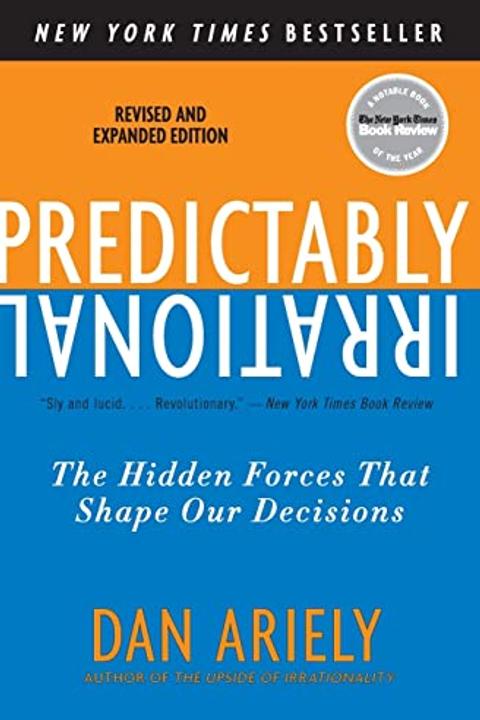
Predictably Irrational
by Dan Ariely
Why read this book
- It explains everyday decisions you've made and never understood, with memorable experiments.
- The "relativity" and "decoy effect" chapters alone will change how you read menus, pricing pages, and your own choices.
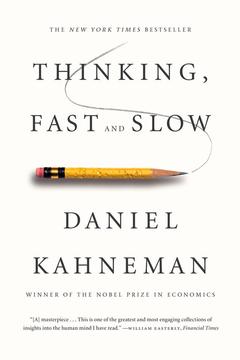
- Lighter and funnier than Kahneman, but covers a lot of the same ground.
- Genuinely useful if you price or sell anything.
In one sentence
Dan Ariely's tour of the consistent, repeatable ways humans make irrational decisions, with the experiments to prove each one.
Key takeaways
- We almost never judge value in absolute terms. We compare, and we compare what's easy to compare. "Everything is relative, and that's the point."
- The decoy effect: add a third, deliberately worse option and you predictably push people toward the option you want them to pick. Restaurants do it with the second-most-expensive dish.
- Because we judge relatively, jealousy and envy come built-in. One practical move is to control your "circles" — the people and options you compare yourself against.
- "Most people don't know what they want unless they see it in context." Context isn't noise around the decision; it often is the decision.
- The cure for the relativity trap is to deliberately widen or narrow the frame on purpose, instead of letting the default comparison run you.
Summary
Ariely's hook is in the title: we're irrational, but not randomly so. We're irrational in consistent, predictable patterns, which means you can study them and even design around them.
The opening chapters build on relativity. We don't assess things on their own merits; we compare them to whatever's nearby, and we prefer comparisons that are easy to make. That single quirk explains the decoy effect (a worse third option that makes one of the other two look great), why the second-most-expensive item sells well, and even why we get miserable comparing our lives to other people's.
The rest of the book runs the same move across other domains — the strange power of "free," the way we overvalue what we own, how arbitrary first numbers anchor everything after them. Each chapter is an experiment, a result, and a practical implication. It's behavioral economics for people who'd rather read stories than studies.
Reflections
The relativity and decoy chapters are the ones I think about most, usually when I'm looking at a pricing page. "Most people don't know what they want unless they see it in context" is the line that stuck. It's a useful reminder that the options you show around a choice often matter more than the choice itself.
“"Most people don't know what they want unless they see it in context."”
— Dan Ariely
Who should read this
- Anyone who prices, markets, or sells (the relativity and decoy chapters are directly useful).
- Readers who liked Thinking, Fast and Slow but want something lighter.
- People who want to catch their own bad decisions in the act.
Favorite quotes
- "Most people don't know what they want unless they see it in context."
- "Everything is relative, and that's the point."
- "We are always looking at the things around us in relation to others. We can't help it."
- "The more we have, the more we want. And the only cure is to break the cycle of relativity."
- "Even though people generally won't buy the most expensive dish on the menu, they will order the second most expensive dish."
FAQ
What is Predictably Irrational about?
The consistent, predictable ways people make irrational decisions, shown through behavioral experiments.
What is the decoy effect?
Adding a deliberately inferior third option to make one of the other two more attractive and shift what people choose.
What is the main idea?
We judge value by relative comparison, not in absolute terms, which leads to predictable mistakes.
Is it worth reading?
Yes, especially if you price or sell anything, or liked Kahneman and want a lighter read.
Detailed Notes
- Relativity: we judge by comparison, not in absolute terms — and we compare what's easy to compare.
- The decoy effect: a deliberately worse third option shifts the choice (it's why the second-most-expensive dish sells).
- The cost of comparison: jealousy and envy come built in, so deliberately control your "circles" of comparison.
- The core line: most people don't know what they want until they see it in context.