Meditations
by Marcus Aurelius
Why read this book
- It's the foundational Stoic text the modern wave (Ryan Holiday, The Daily Stoic, The Obstacle Is the Way, Ego Is the Enemy) is built on — read this and you've gone to the source.
- It was written by the most powerful man in the world to no one but himself, which is exactly why it reads as honest rather than performative.
- The core tools — separate what you control from what you don't, keep death in view, treat obstacles as material — are among the most durable mental models ever written down.
- It's short, non-linear, and repetitive by design, so you can open it anywhere and get a usable reminder in two minutes.
In one sentence
The private journal of a Roman emperor practicing Stoicism on himself — short, repeated reminders to control his own judgments, accept what he can't change, do his duty, and keep death in view.
Key takeaways
- The dichotomy of control is the engine of the whole book: your judgments, choices, and effort are yours; outcomes, reputation, and other people are not. Spend your energy only on the first.
- Memento mori is everywhere. Marcus keeps reminding himself he could die at any moment, not to be morbid but to strip away triviality and force action now: "You could leave life right now. Let that determine what you do and say and think." (Book 2.11)
- Obstacles are raw material, not interruptions. The mind adapts and turns the impediment into the path forward — this is the origin of the modern "the obstacle is the way."
- Harm is mostly a judgment, not an event. "Choose not to be harmed—and you won't feel harmed. Don't feel harmed—and you haven't been." (Book 4.7)
- You're part of a whole. We exist for one another; doing your duty to the common good is what a rational, social creature is for. Withdrawing into private grievance is a kind of malfunction.
- Difficult people are a given, plan for them. Marcus opens his day by telling himself he'll meet the ungrateful, the arrogant, and the dishonest — and that he can't be harmed by them because they can't make him ugly inside.
- Take the view from above. Zoom out to the scale of history and the cosmos and your anxieties shrink to their true size; fame, slights, and worries look tiny from there.
- Everything is impermanent and recurring. People, empires, and reputations all pass; nature is constant change, and resisting that is the source of most suffering.
- Stop talking about virtue and practice it. "Waste no more time arguing what a good man should be. Be one." (Book 10.16)
Summary
Meditations is not a book Marcus Aurelius wrote for us. It's a private notebook the Roman emperor kept for himself, mostly during military campaigns near the end of his life, working through Stoic philosophy as a daily practice rather than a system to teach. That's the key to reading it: there's no argument being built, no narrative, no audience. There are 12 short "books" of fragments — reminders, rebukes, and consolations the most powerful man in the world wrote to keep himself sane and decent.
The spine of the whole thing is Stoic, inherited mainly from Epictetus: the dichotomy of control. Almost everything that troubles us — what other people do, how we're seen, whether our plans work out — lies outside our control. What's inside it is narrow but total: our own judgments, intentions, and responses. Marcus returns to this dozens of times in different words, because the practice is never finished. Harm, he tells himself, is a judgment you can decline to make. Anger at other people is a misunderstanding of what you control. The work is internal.
From that root grow the recurring themes. Memento mori — death is always near, so live now and let mortality cut through trivia. The obstacle as material — the mind can turn any impediment into the next step, which is where "what stands in the way becomes the way" comes from. Duty to the common good — humans are made for one another, like hands or eyelids, and serving the whole is simply what a rational social creature does. Dealing with difficult people — expect them, understand that their failings come from ignorance, and refuse to let them make you bitter. The view from above — zoom out far enough and your worries are revealed as small. And impermanence — everything changes and passes, so cling to nothing.
What makes it land is the voice. Because Marcus is writing to himself, he's not selling. He scolds himself for sleeping in, for caring about reputation, for wanting credit. He repeats things because he keeps failing at them, which is reassuring — even an emperor with the best Stoic teachers had to relearn the same lessons every morning. The book is repetitive, unsystematic, and occasionally bleak, and that's exactly why it has outlasted nearly everything written around it. It reads less like philosophy and more like watching someone do the work.
Reflections
What makes Meditations different from the modern Stoic books that quote it is that nobody was meant to read it. Holiday and the rest are teaching; Marcus is just trying to get himself through the day, and that changes how the same ideas land. The dichotomy of control is the part that survives outside the book and outside Stoicism entirely — it's a clean filter for almost any worry: is this mine to control, or am I burning energy on something that isn't?
The "obstacle becomes the way" framing is genuinely useful and slightly more honest in the original than in its modern repackaging, where it can tip into hustle-culture optimism; Marcus isn't saying every obstacle is secretly a gift, he's saying your response to it is the one move that's always available.
The weakness is structural — it's fragments, so a first-time reader can drift without a thread to hold. But the repetition is the tell: a man with absolute power, the best teachers, and every advantage still had to remind himself of the basics every morning. That's the most reassuring thing in the book.
“"The impediment to action advances action. What stands in the way becomes the way." (Book 5.20)”
— Marcus Aurelius
Who should read this
- Anyone who's read the modern Stoics (Holiday, The Daily Stoic, The Obstacle Is the Way, Ego Is the Enemy) and wants the primary source those books quote constantly.
- People dealing with stress, loss, or things outside their control who want a practical, non-religious framework for it.
- Anyone in a high-pressure or high-status role who needs a regular reminder to stay humble and do their duty.
- Readers who prefer a book they can dip into rather than read straight through.
- Skip if you want a structured argument or a beginner's on-ramp; this is fragmentary and assumes you'll do the connecting. Start with The Daily Stoic and come back.
Favorite quotes
- "The impediment to action advances action. What stands in the way becomes the way." (Book 5.20)
- "You could leave life right now. Let that determine what you do and say and think." (Book 2.11)
- "Choose not to be harmed—and you won't feel harmed. Don't feel harmed—and you haven't been." (Book 4.7)
- "Waste no more time arguing what a good man should be. Be one." (Book 10.16)
- "The best revenge is not to be like that." (Book 6.6)
- "The things you think about determine the quality of your mind. Your soul takes on the quality of your thoughts." (Book 5.16)
FAQ
What is Meditations about?
It's the private notebook of the Roman emperor Marcus Aurelius — Stoic reminders he wrote to himself about controlling his judgments, accepting what he can't change, doing his duty, and keeping death in view.
Was Meditations written to be published?
No. It was never intended for an audience; the original title, Ta eis heauton, means "To Himself." It survived by accident and circulation after his death.
What is the main idea of Meditations?
The Stoic dichotomy of control: focus your energy only on what's truly yours — your own judgments, choices, and responses — and let go of outcomes, reputation, and what other people do.
What is memento mori in Meditations?
The practice of keeping death constantly in view. Marcus uses it not to be gloomy but to strip away trivial concerns and act well right now, because life could end at any moment.
Did "the obstacle is the way" come from Meditations?
Yes. The idea traces to Book 5.20 — "The impediment to action advances action. What stands in the way becomes the way." Ryan Holiday's book The Obstacle Is the Way builds on it directly.
Which translation of Meditations should I read?
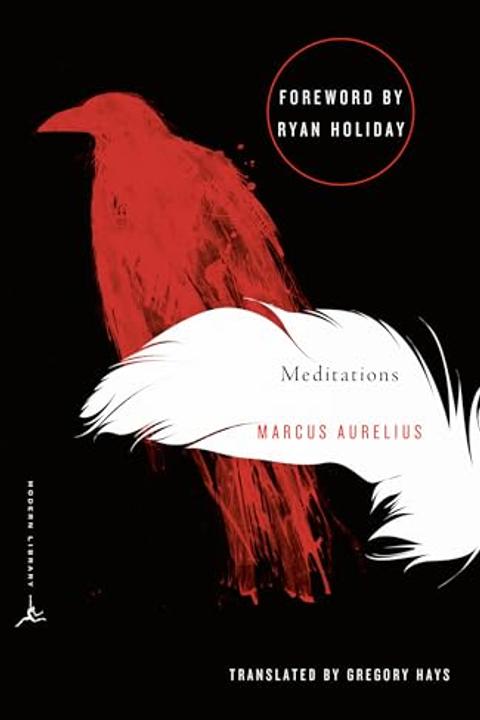
The Gregory Hays (Modern Library) translation is the most widely recommended modern version for its clear, readable prose; the older Long and Farquharson translations are more archaic.
Is Meditations worth reading?
Yes, especially as the primary source behind modern Stoicism. It's short and best read slowly or dipped into rather than rushed straight through.
Detailed Notes
Click to expand the full detailed notes →
Detailed Notes
Click to expand the full detailed notes →
Meditations has no plot or argument to follow — it's a notebook of recurring themes Marcus circles back to again and again. The most useful way to read it is by theme rather than book number.
- The dichotomy of control (the foundation): inherited from Epictetus. Your judgments, intentions, and responses are within your power; everything else — outcomes, other people, reputation, the body, death — is not. Nearly every other theme is an application of this one. "Choose not to be harmed—and you won't feel harmed. Don't feel harmed—and you haven't been." (Book 4.7)
- Memento mori (keep death in view): Marcus reminds himself constantly that he could die at any moment. The point is not gloom but urgency and proportion — death strips away triviality and forces honest action now. "You could leave life right now. Let that determine what you do and say and think." (Book 2.11)
- The obstacle becomes the way: the mind adapts and converts the impediment into the next step. Obstacles are raw material for action, not reasons to stop. "The impediment to action advances action. What stands in the way becomes the way." (Book 5.20). This passage is the seed of Ryan Holiday's The Obstacle Is the Way.
- The view from above: zoom out to the scale of history, geography, and the cosmos. From far enough away, fame, slights, and anxieties shrink to their real (tiny) size. A deliberate exercise in perspective Marcus runs on himself repeatedly.
- Duty and the common good: humans exist for one another, like parts of a single body — hands, eyelids, rows of teeth. Serving the whole is simply what a rational, social creature is for. Withdrawing into private grievance or laziness is a malfunction of your nature. (He literally scolds himself in the morning for not wanting to get out of bed and do his work.)
- Dealing with difficult people: plan for them. Marcus opens his day by telling himself he'll meet the ungrateful, arrogant, dishonest, and jealous — that their failings come from ignorance of good and evil — and that none of them can implicate him in ugliness or make him hate them. The best response to bad behavior is not to imitate it: "The best revenge is not to be like that." (Book 6.6)
- Impermanence and constant change: people, empires, and reputations all pass; nature is ceaseless change, and what dies simply changes form. Resisting impermanence is a major source of suffering; accepting it is freedom. Fame is worthless partly because everyone who would remember you also dies.
- Guarding the mind / the inner citadel: the quality of your life follows the quality of your thoughts. The mind is a fortress you can retreat to, and what you let occupy it shapes you. "The things you think about determine the quality of your mind. Your soul takes on the quality of your thoughts." (Book 5.16)
- Virtue over talk: stop theorizing about being good and just do it. "Waste no more time arguing what a good man should be. Be one." (Book 10.16) Action and character are the whole point; philosophy is practice, not commentary.
- Anchor idea: the recurring move under all of it — when something disturbs you, the disturbance is in your judgment of the thing, not the thing itself. Change the judgment and you change the experience.