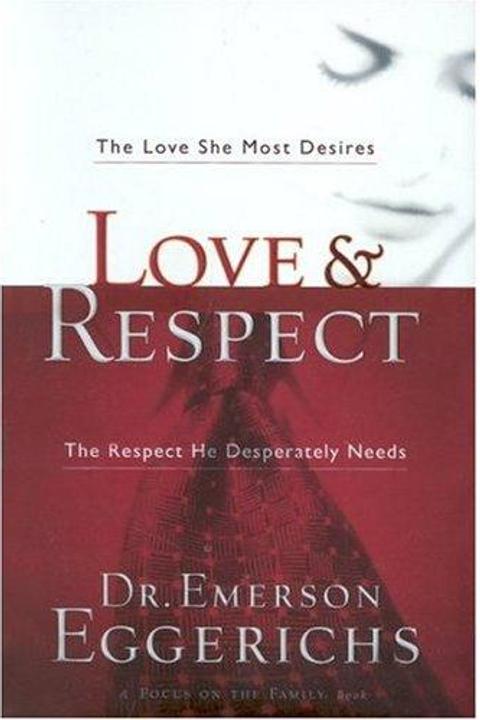
Love & Respect: The Love She Most Desires; The Respect He Desperately Needs
by Dr. Emerson Eggerichs
Why read this book
- It hands you one diagnostic lens for recurring fights: are we stuck in a loop where each person is withholding what the other needs?
- The core asymmetry — that men and women can have different primary emotional needs — is worth sitting with even if you reject the specifics.
- It's prescriptive and concrete. There are named tools (the COUPLE and CHAIRS acronyms) you can actually try.
- It's one of the best-selling marriage books of the last two decades, so it's useful to know the argument even just as cultural reference.
In one sentence
A Christian marriage book built on one idea from Ephesians 5:33 — that a wife's deepest need is to feel loved and a husband's is to feel respected, and that most marital conflict is the two spouses withholding the thing the other needs most.
Key takeaways
- The central claim: a wife's primary need is to feel loved, and a husband's primary need is to feel respected. Eggerichs treats these as different default settings, not a ranking of who needs more.
- The Crazy Cycle is the failure mode. Without love she reacts without respect; without respect he reacts without love. Each person's reaction triggers the other's, and the spiral feeds itself.
- The Energizing Cycle is the fix. His love motivates her respect, and her respect motivates his love. Same loop, run forward instead of backward — someone has to make the first unconditional move.
- The book is explicitly Christian and complementarian. It reads Ephesians 5:33 as instructing husbands to love unconditionally and wives to respect unconditionally, and that asymmetry is the whole frame.
- "Respect" is the load-bearing and most contested word. Eggerichs argues men can feel unloved as "disrespect," and that criticism often lands on a husband as contempt rather than as feedback.
- Two practical acronyms. COUPLE is how a husband spells love to his wife (Closeness, Openness, Understanding, Peacemaking, Loyalty, Esteem). CHAIRS is how a wife spells respect to her husband (Conquest, Hierarchy, Authority, Insight, Relationship, Sexuality).
- The third stage, the Rewarded Cycle, says you keep doing this even when your spouse doesn't reciprocate, because (in the book's framing) the real audience is God, not your partner.
- The unconditional part is the hard ask. Love and respect are framed as things you give without waiting for the other person to earn them or go first.
Summary
Love & Respect takes one verse, Ephesians 5:33, and builds a whole marriage framework on it. Eggerichs, a pastor and marriage counselor, reads that verse as a division of labor: husbands are told to love their wives, wives are told to respect their husbands. From that he argues each spouse has a different primary emotional need. She needs to feel loved. He needs to feel respected.
The most useful part is the diagnostic. Eggerichs calls the failure mode the Crazy Cycle: without love she reacts without respect, and without respect he reacts without love. The point is that the loop is self-sustaining. A wife who feels unloved pulls back in a way that reads to her husband as disrespect, he reacts in a way that reads to her as unloving, and round it goes. Naming the loop is half the value, because it reframes a fight as a pattern instead of a verdict on the other person.
The fix is the same loop reversed, which he calls the Energizing Cycle: his love motivates her respect, her respect motivates his love. The catch is that someone has to move first and unconditionally, without waiting to see if the other person earns it. He gives two acronyms as concrete tools. COUPLE is the husband's checklist for showing love (Closeness, Openness, Understanding, Peacemaking, Loyalty, Esteem). CHAIRS is the wife's checklist for showing respect (Conquest, Hierarchy, Authority, Insight, Relationship, Sexuality). A third stage, the Rewarded Cycle, handles the case where your spouse never reciprocates: you keep going anyway, because the book locates the ultimate motivation in serving God rather than your partner.
It's worth being clear about what the book is and isn't. It's explicitly Christian and complementarian, and the "wives respect, husbands love" split is the load-bearing structure, not a footnote. That framing has drawn real criticism — that "respect" can become a way to deflect a wife's legitimate complaints, and that assigning love to one spouse and respect to the other is a false split when both people need both. You can find the Crazy Cycle idea genuinely useful and still push back on the gendered scaffolding around it.
Reflections
The part that holds up outside the framework is the Crazy Cycle. The idea that a fight is often a loop where each person is withholding the exact thing the other needs, and that someone has to break it by giving unconditionally first, is a clean way to think about recurring conflict. Where I'd want to read carefully is the gendered split. Assigning love to one spouse and respect to the other is a strong claim, and the common criticism — that "respect" can quietly become a way to wave off a partner's legitimate complaints — seems fair to take seriously. Useful diagnostic, contested foundation.
“"Without love she reacts without respect; without respect he reacts without love."”
— Dr. Emerson Eggerichs
Who should read this
- Couples who keep having the same fight and want a name for the loop they're stuck in.
- Readers comfortable with, or specifically looking for, a Christian and complementarian framing of marriage — that's the book's foundation, not a coat of paint.
- Skip it if you want a secular, evidence-based relationship book, or if the idea of assigning "love" to one spouse and "respect" to the other reads as a false split to you. The Crazy Cycle concept survives outside the framework; the rest of the book may not.
Favorite quotes
- "Without love she reacts without respect; without respect he reacts without love."
- "A wife has one driving need — to feel loved. When that need is met, she is happy. A husband has one driving need — to feel respected. When that need is met, he is happy."
- "His love motivates her respect; her respect motivates his love."
FAQ
What is Love & Respect about?
A Christian marriage framework arguing that a wife's deepest need is to feel loved, a husband's is to feel respected, and that conflict spirals when each withholds what the other needs.
What is the Crazy Cycle?
The book's failure mode: without love she reacts without respect, and without respect he reacts without love, so each reaction feeds the next.
What is the Energizing Cycle?
The Crazy Cycle reversed — his love motivates her respect, and her respect motivates his love — which requires someone to make the first unconditional move.
What verse is the book based on?
Ephesians 5:33, which Eggerichs reads as telling husbands to love their wives and wives to respect their husbands.
What are COUPLE and CHAIRS?
Two acronyms: COUPLE is how a husband shows love (Closeness, Openness, Understanding, Peacemaking, Loyalty, Esteem); CHAIRS is how a wife shows respect (Conquest, Hierarchy, Authority, Insight, Relationship, Sexuality).
Is Love & Respect worth reading?
Useful if you want the Crazy Cycle diagnostic and are fine with a Christian, complementarian frame. Worth knowing the criticism that the love/respect split can be used to sidestep a wife's real concerns.
Detailed Notes
Click to expand the full detailed notes →
Detailed Notes
Click to expand the full detailed notes →
The book is organized around three cycles:
- The Crazy Cycle (the problem): without love she reacts without respect; without respect he reacts without love. The loop is self-reinforcing, so the win is recognizing it as a pattern rather than reacting to the last thing your spouse did.
- The Energizing Cycle (the solution): his love motivates her respect, her respect motivates his love — the same loop run in the positive direction. It requires giving unconditionally instead of waiting for the other person to go first.
- The Rewarded Cycle (the endurance case): keep going even when there's no reciprocation, with the motivation reframed (in the book) as serving God rather than your spouse.
Two practical tools sit inside the Energizing Cycle:
- COUPLE — the husband's guide to showing love: Closeness, Openness, Understanding, Peacemaking, Loyalty, Esteem.
- CHAIRS — the wife's guide to showing respect: Conquest, Hierarchy, Authority, Insight, Relationship, Sexuality.
Foundation and framing. The whole structure rests on Ephesians 5:33 and a complementarian view of marriage, including a "headship" concept for the husband — central, not incidental. The recurring mechanism is decoding: a wife reads silence as hostility, a husband reads criticism as contempt, and much conflict is one spouse sending in their own "language" while the other receives it in theirs.
The main criticism to hold alongside it: splitting love and respect by gender is a false dichotomy when both partners need both, and "respect" can be used to dismiss a wife's valid grievances rather than address them.