Headway Connection Kit for Couples Review: Is It Worth It?
A practical review of the Headway Connection Kit for Couples, including what is inside, who it suits, how it compares with other conversation games, and whether the full kit is worth buying.
 ByGraham Mann7-min read
Most couples do not have a talking problem in the literal sense.
They talk all the time. Groceries. Work schedules. Who is picking up what. What happened today. What needs to happen tomorrow.
The harder thing is making room for the conversations that do not show up on a calendar by themselves. How are we doing? What do we keep avoiding? What do we want more of? What have we stopped noticing about each other?
That is the problem products like the Headway Connection kit for couples are trying to solve. It is not a replacement for therapy, and it is not going to fix a relationship that neither person wants to work on. But as a structured way to get two people off their phones and into a better conversation, it is more useful than I expected.
What is the Headway Connection Kit?
The Connection Kit is a boxed set from Headway, the company best known for its book summary app. This product sits in a different category: relationship tools, card decks, and screen-free rituals for couples.
The full kit lists at $159.99, though Headway often discounts it. Inside the box, you get a few separate pieces:
- Pillow Talks, a 145-card deck built around intimacy and deeper questions
- The Story Deck, a lighter storytelling game
- Love Notes, affirmation cards for everyday warmth
- A rose-scented candle, mostly as a cue to slow the room down
- A couples calendar for dates, milestones, and planning
- Markers for notes and reminders
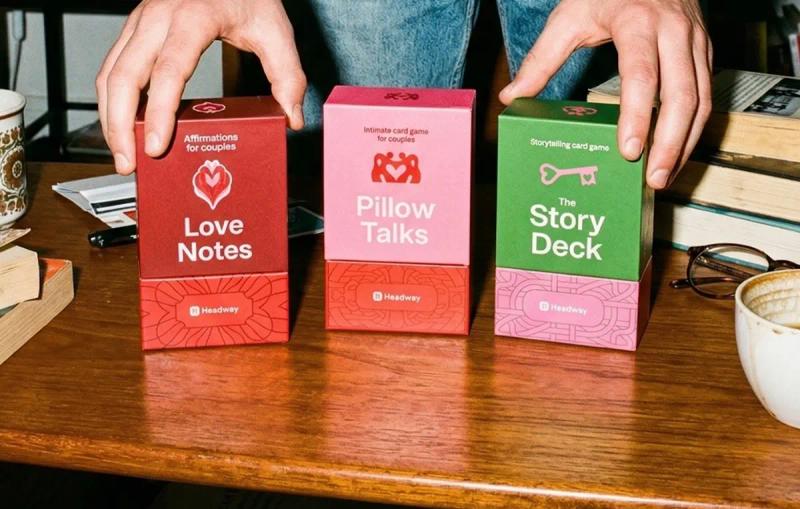
The basic idea is simple. Instead of waiting for a good conversation to happen naturally, you create a small ritual around it.
That is probably the right frame for this product. The value is less in any single card and more in making the conversation easier to start.
First impressions
The packaging is one of the kit's strengths. It looks like something you could give as an anniversary gift or bring out for a date night without it feeling like homework.
That matters more than it sounds. A lot of self-improvement products fail because they feel too earnest. They ask too much from the user before any benefit shows up. This one is easier: open the box, pick a deck, answer a few cards.
The design is also better than the category average. The cards are bright without looking childish, and the typography is clean enough that the whole thing feels more like a designed object than a novelty game.
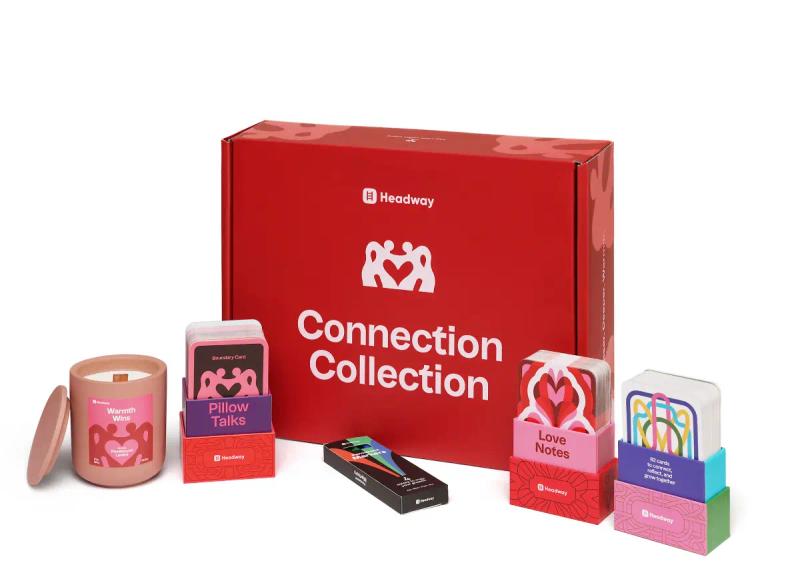
The candle and markers are not the main reason to buy it. They make the set feel complete, but the decks are doing the work. If you only care about the prompts, the standalone Pillow Talks Card Game from Headway is the more practical buy.
How it works in practice
A typical use case is 20 to 40 minutes. Pick a deck based on the mood and go through a few cards together.
The Story Deck is the easiest starting point. It is lighter, closer to a dinner-table game, and probably the best fit if one person is skeptical of guided conversation.
Love Notes is more direct. It is built around affirmation and appreciation, which can feel awkward if that is not already part of the relationship. But awkward is not always a bad sign. Sometimes it just means the habit is underused.
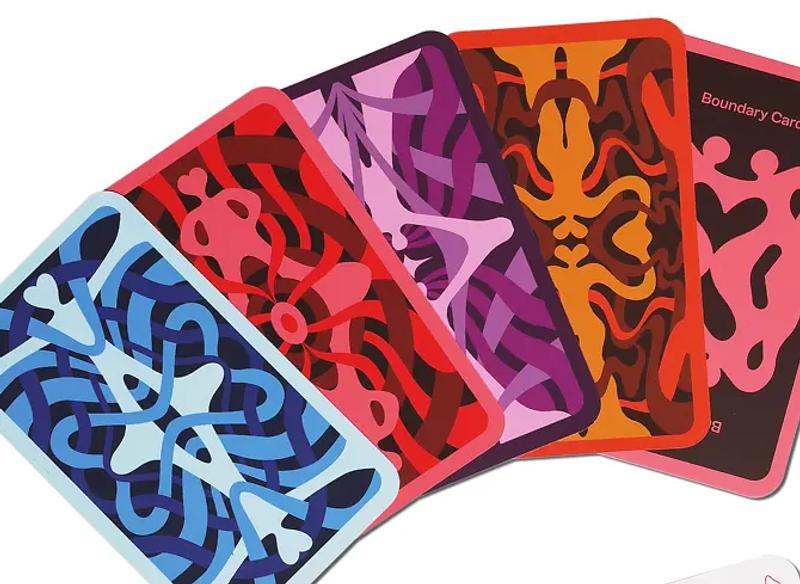
Pillow Talks is the strongest part of the kit. It is the deck that most clearly justifies the product. The prompts are organized into levels of closeness, and the deck includes a Boundary Card so either person can pause or skip without turning that into a separate negotiation.
That small design choice does a lot. Good relationship tools should make honesty easier without making either person feel trapped by the format.
Where it is most useful
I can see this working best for couples who already like each other and want a better rhythm for talking.
That sounds obvious, but it is important. A card deck is not a crisis intervention. It is a prompt system.
The best uses are probably:
- date nights at home, when the default would otherwise be another movie
- busy couples who mostly talk about logistics
- long-distance couples who want video calls to feel less repetitive
- newer couples who want to get past small talk without forcing it
- married couples who have fallen into a practical but slightly flat routine
There is a useful connection here to Nonviolent Communication, which is one of the better frameworks for talking without turning every hard conversation into a defense of your own position. The Headway kit is much lighter than that, but the same principle shows up: structure can make a conversation safer.
It also works like a habit tool. You are not trying to have one perfect three-hour talk. You are trying to make small, better conversations happen more often. That is closer to the logic of Atomic Habits than to the logic of a dramatic relationship breakthrough.
How it compares with other conversation games
The obvious comparisons are We're Not Really Strangers and The And.
We're Not Really Strangers is sharper. It has more edge, and the questions can get intense quickly. That can be good, but it also means it is not always the deck you want on a normal Wednesday night.
The And has a more cinematic feel because it grew around recorded conversations. Some people will love that. Others may find it a little performative.
Headway's kit is less edgy than both. Its advantage is range. One deck is playful, one is warm, and one is deeper. That makes it less memorable as a single concept, but probably more usable as a recurring ritual.
If you only want a conversation deck, buy Pillow Talks on its own. If you want a polished gift or a full date-night box, the full Connection Kit makes more sense.
Why conversation prompts can work
The research behind this category is better than the packaging sometimes suggests.
The Gottman Institute has written for years about the importance of small bids for connection. In one well-known finding, couples who later stayed married turned toward each other's bids for connection far more often than couples who later divorced.
There is also Arthur Aron's 1997 study on structured self-disclosure questions, the work that later became famous as the "36 questions" experiment. The useful point is not that a list of questions can manufacture love. It is that mutual attention and gradually deeper disclosure can create closeness faster than ordinary small talk.
A boxed card deck is not a lab study. But it is using the same basic mechanism: slow down, ask something better, listen a little longer than usual.
Pros and cons
The strengths:
- easy to start, even if you do not normally do guided activities
- three decks cover different moods instead of forcing one tone
- the Boundary Card is a thoughtful safety valve
- the full set works well as a gift
- the design is strong enough that people may actually leave it out and use it
The weaknesses:
- the full kit is expensive if you only want the prompt cards
- naturally talkative couples may find the structure unnecessary
- the candle and markers are nice, but not essential
- it requires distraction-free time to be useful
- it should not be treated as a substitute for therapy or conflict repair
Who should buy it?
The Headway Connection Kit makes the most sense for couples who want better conversations but do not want to turn the relationship into a project.
That is the line this product has to walk. Too little structure and nothing changes. Too much structure and the whole thing feels forced.
Headway mostly gets the balance right. The product is guided, but not clinical. It is warm, but not unbearably sentimental. It gives you enough structure to begin, then gets out of the way.
I would buy the full kit if I wanted a polished gift or a ready-made date-night ritual. I would buy Pillow Talks separately if I only cared about the deeper conversation prompts.
Either way, the point is not the box.
The point is making it easier to have the conversation before it becomes overdue.