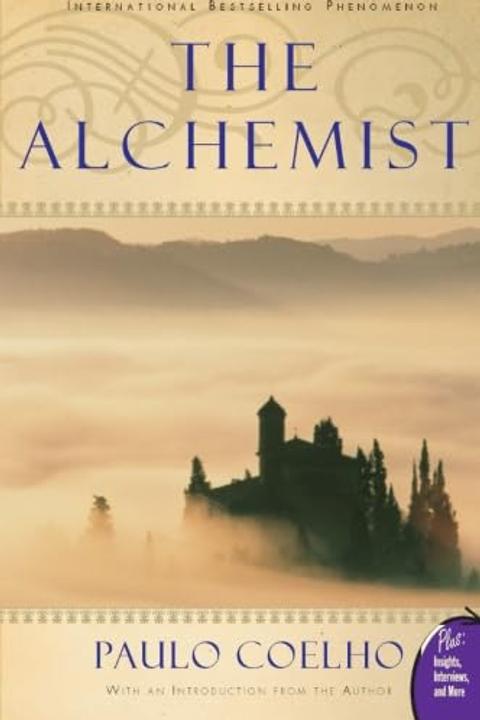
The Alchemist
by Paulo Coelho
Why read this book
- It's the modern fable on following your dreams, and its core ideas (Personal Legend, omens, the Soul of the World) have soaked into everyday language about purpose.
- It's short, plainly written, and reads like a parable, so the lesson lands fast and stays with you.
- It reframes fear: the book argues the fear of suffering, not suffering itself, is what stops most people from pursuing what they want.
- It's one of the best-selling books of all time and a cultural touchstone, so reading it is partly understanding a shared reference point.
In one sentence
Paulo Coelho's fable about Santiago, an Andalusian shepherd who follows a recurring dream across the desert in search of treasure and learns that pursuing your Personal Legend matters more than the destination it leads to.
Key takeaways
- Everyone has a Personal Legend — the thing they most want to become or do — and the book's whole argument is that abandoning it is the real failure, not the difficulty of chasing it.
- When you commit to your Personal Legend, the world seems to organize itself to help: "all the universe conspires" in your favor, an idea Coelho calls the favorable principle of beginner's luck and the Soul of the World.
- Learn to read omens. Santiago's journey is a sequence of signs he must notice and trust, and the book treats attention to the world as a teachable skill, not luck.
- The fear of suffering is heavier than suffering itself. Most people stall not because the path is too hard but because they're afraid of how hard it might be.
- Love does not have to be an obstacle to your Personal Legend. Santiago's love for Fatima accelerates his journey rather than ending it, because true love wants the other person to become who they're meant to be.
- The treasure was near home all along, but he could only find it by leaving. The journey wasn't a detour from the prize — it was the price of being able to see it.
- "Maktub" — it is written. The book balances active pursuit with acceptance, holding that you must move toward your dream while trusting that some things are meant to be.
Summary
The Alchemist follows Santiago, a young shepherd in Andalusia who has the same dream twice: a child tells him there is treasure waiting at the Egyptian pyramids. A fortune teller and then a mysterious old man, the king of Salem, push him to follow it, introducing the book's governing idea — that each person has a Personal Legend, a destiny they're meant to pursue, and that "when you want something, all the universe conspires" to help you reach it. Santiago sells his sheep and crosses to Africa to begin.
The journey is a string of setbacks and teachers. He is robbed almost immediately, works for a crystal merchant to rebuild his stake, joins a caravan across the Sahara, and learns to read the omens the world keeps offering. At an oasis he meets and falls in love with Fatima, and faces the book's central tension: whether to settle into love or keep going. The lesson Coelho draws is that real love doesn't ask you to abandon your Personal Legend; Fatima sends him onward, trusting he'll return.
In the desert Santiago meets the alchemist, the figure who trains his final lessons. Less about turning lead to gold than about listening to one's heart and to the Soul of the World — the single force that connects everything — the alchemist teaches Santiago to trust the path even when it terrifies him, including a moment where he must turn himself into the wind to survive. The mysticism is unembarrassed and the parable is delivered without irony.
The ending is the twist that makes the fable: Santiago reaches the pyramids, digs, and finds nothing but a beating from thieves. In passing, one of them mentions his own recurring dream of treasure buried back in a ruined church in Spain — the exact spot where Santiago first slept with his sheep. The treasure was near home the whole time. But he could only recognize it after the journey, which is the point. The destination was always within reach; the pursuit was what he actually needed.
Reflections
The idea worth keeping is the reframing of fear: that what stops most people isn't suffering but the fear of it, and that abandoning your Personal Legend is the actual failure rather than trying and struggling. That's a sturdier claim than the book's mysticism, and it survives outside the fable.
The "universe conspires" line is the part to hold lightly — read literally it's wishful, but read as "commitment changes what you notice and pursue" it's closer to true, because people who fully commit do spot opportunities and align their choices in ways that look like luck.
The ending is the smartest move in the book: the treasure being near home all along reframes the whole journey as the thing that earned him the eyes to see it.
The weakness is the same as the strength — it's a parable, so it persuades by feeling rather than argument, and a skeptic can wave the whole thing away. But as a nudge toward acting on a dream you keep deferring, it does its one job well.
“"When you want something, all the universe conspires in helping you to achieve it."”
— Paulo Coelho
Who should read this
- Anyone at a crossroads who keeps talking themselves out of a dream and needs a clean, encouraging push rather than a tactical plan.
- Readers who like parables and allegory and don't need their wisdom hedged or footnoted.
- People who want to understand a near-universal cultural reference, since the book's vocabulary of "Personal Legend" and "the universe conspiring" turns up everywhere.
- Skip it if you bristle at earnest mysticism or want concrete how-to; it's a fable, not a method, and its magic is meant to be taken on faith.
Favorite quotes
- "When you want something, all the universe conspires in helping you to achieve it."
- "Tell your heart that the fear of suffering is worse than the suffering itself."
- "There is only one thing that makes a dream impossible to achieve: the fear of failure."
- "It's the possibility of having a dream come true that makes life interesting."
FAQ
What is a Personal Legend in The Alchemist?
It's the central concept: the one purpose or destiny each person is meant to pursue in life. Coelho argues that knowing your Personal Legend is easy when you're young, and that the real failure is giving up on it.
What is the main message of The Alchemist?
That pursuing your dream — your Personal Legend — is the point of life, that the world helps those who commit to it, and that the journey itself transforms you more than the destination does.
What does "the universe conspires" mean in the book?
It's the idea that once you genuinely commit to your dream, circumstances, people, and omens begin to align in your favor, drawn from what Coelho calls the Soul of the World.
What is the Soul of the World?
The single spiritual force in the book that connects all things, which Santiago learns to listen to. Reading omens and following one's heart are how characters tune into it.
What happens at the end of The Alchemist?
Santiago reaches the pyramids and finds no treasure there, but learns from a thief that the treasure is buried back home in Spain, where he started. The journey was necessary for him to find what was near him all along.
Is The Alchemist worth reading?
Yes if you enjoy parables and want an encouraging, fast read about following your dreams. It's a beloved modern classic, though readers who dislike earnest mysticism may find it thin.
Detailed Notes
Click to expand the full detailed notes →
Detailed Notes
Click to expand the full detailed notes →
- Santiago the shepherd: an Andalusian boy who chose shepherding to travel; the recurring dream of treasure at the Egyptian pyramids sets the journey in motion. He is the everyman whose ordinary life is interrupted by a call to something larger.
- The Personal Legend: the book's central idea — each person's destined purpose. "Everyone, when they are young, knows what their Personal Legend is." The tragedy Coelho names is giving it up; the whole arc is about refusing to.
- The recurring dream and the treasure: the dream comes twice and is read as an omen. The literal treasure is the engine of the plot, but the book's payoff hinges on it not being where it was promised.
- "All the universe conspires": once Santiago commits, the king of Salem (Melchizedek) tells him the world aligns to help. This is the favorable principle — beginner's luck, omens, and the sense that the path opens for those who walk it.
- The Soul of the World: the single force connecting everything; learning to read omens and listen to one's heart is how characters tune into it. The journey is partly an apprenticeship in this attention.
- Reading omens: treated as a teachable skill, not luck. Santiago's progress is measured by how well he learns to notice and trust the signs the world keeps offering.
- Love and the Personal Legend: Fatima, met at the oasis, is the test. The lesson is that true love doesn't ask you to abandon your dream — she sends Santiago onward, and the love speeds the journey rather than ending it.
- The alchemist: the final teacher, who cares less about turning lead to gold than about listening to the heart and the Soul of the World. He guides Santiago through the desert and the dangerous lesson of turning himself into the wind.
- "Maktub" — it is written: the book's balance of effort and acceptance. You must actively pursue your dream while trusting that some things are meant to be.
- The treasure was within reach all along: Santiago finds no treasure at the pyramids; a thief reveals it's buried back home in Spain, where he started. He could only find it by leaving — the journey earned him the sight.
- Anchor quote: "When you want something, all the universe conspires in helping you to achieve it."