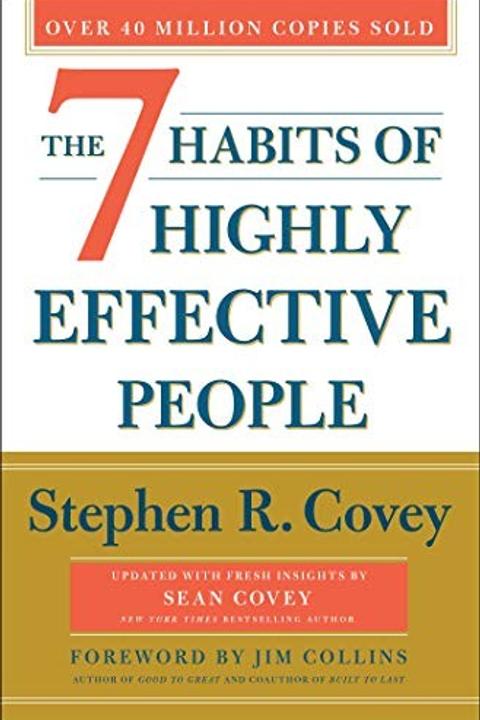
The 7 Habits of Highly Effective People
by Stephen R. Covey
Why read this book
- It gives you a single, ordered framework for self-management that has held up across three decades, not a grab-bag of tips.
- The split between "private victory" (mastering yourself) and "public victory" (working with others) is a clean way to think about why self-help and people-skills books usually fail in isolation.
- Habit 5, "seek first to understand, then to be understood," is worth the book on its own for anyone who deals with people.
- The "circle of influence vs. circle of concern" idea is a practical filter for where to spend energy.
In one sentence
Stephen Covey's argument that lasting effectiveness comes from building character around seven principle-based habits that move you from dependence to independence to interdependence.
Key takeaways
- Habit 1, Be Proactive: take responsibility for your responses instead of blaming circumstances. Focus on your circle of influence, the things you can actually act on, rather than your circle of concern.
- Habit 2, Begin with the End in Mind: define what success looks like before you start, ideally through a personal mission statement. All things are created twice, first mentally, then physically.
- Habit 3, Put First Things First: prioritize by importance, not urgency. Spend time in Quadrant II, the important-but-not-urgent work that's easy to keep postponing.
- Habit 4, Think Win-Win: seek agreements where both sides benefit, treating life as cooperative rather than a zero-sum competition.
- Habit 5, Seek First to Understand, Then to Be Understood: listen to genuinely understand the other person before pushing your own point. Covey calls this empathic listening.
- Habit 6, Synergize: combine strengths so the result is greater than the sum of the parts. Treat differences as the raw material for better solutions.
- Habit 7, Sharpen the Saw: renew yourself across physical, mental, social/emotional, and spiritual dimensions so the other six habits stay sustainable.
- The structure underneath the habits: a maturity continuum from dependence to independence (the "private victory," habits 1–3) to interdependence (the "public victory," habits 4–6), with habit 7 maintaining the whole system. Covey grounds it all in the "character ethic," the idea that effectiveness is built on principles and integrity, not surface tactics.
Summary
The 7 Habits sits on a single argument Covey makes up front: most modern self-help is built on what he calls the "personality ethic," quick techniques for managing image and relationships, while the books that actually changed lives across history were built on the "character ethic," the slow work of aligning yourself with principles like integrity, fairness, and patience. The seven habits are his attempt to make that character work concrete and ordered.
The order matters more than the individual habits. Covey lays them on a "maturity continuum" that runs from dependence (you rely on others) to independence (you can stand on your own) to interdependence (you can combine effectively with others). Habits 1 through 3, being proactive, beginning with the end in mind, and putting first things first, are the inner work he calls the "private victory." They move you from dependence to independence by getting your own choices, direction, and priorities in order before you try to work with anyone else.
Habits 4 through 6 are the "public victory," the move from independence to interdependence: thinking win-win, seeking first to understand then to be understood, and synergizing. Covey's point is that these only work once the private victory is in place. You can't genuinely cooperate, listen, or build on others' strengths if you're still insecure or reactive. Habit 5 in particular, listening to understand before you try to be understood, is the one most readers single out as the practical core of the book.
Habit 7, sharpen the saw, sits outside the sequence and renews all of it. Covey splits self-renewal into four dimensions, physical, mental, social/emotional, and spiritual, and argues that without regular renewal the other six habits decay. The book is long and can feel earnest and repetitive, and some of the corporate examples have dated. But the spine, character before technique, self-mastery before collaboration, principles before tactics, is the reason it's still in print and still quoted.
Reflections
The part that holds up best isn't any one habit, it's the claim that they're ordered. The idea that you can't really do win-win or listen well (the public victory) until you've sorted out your own priorities and reactions (the private victory) explains why a lot of "be a better communicator" advice bounces off; it's being applied before the foundation exists.
The other piece worth keeping is the circle of influence versus circle of concern, which is a quick filter for whether you're spending energy on something you can actually change.
The book is dense and earnest, and a summary captures most of the framework, but the sequencing is the part I'd want to remember.
“"Begin with the end in mind."”
— Stephen R. Covey
Who should read this
- Anyone who wants one coherent framework for self-management rather than scattered productivity hacks.
- Managers and team leads, especially for habits 4 through 6 on cooperation, listening, and combining strengths.
- People who feel reactive or stuck blaming circumstances; habit 1 and the circle-of-influence idea are aimed squarely at that.
- Skip it, or skim a summary, if you want fast tactical advice. This is a slow, principle-first book, and the writing is dense and earnest.
Favorite quotes
- "Begin with the end in mind."
- "Most people do not listen with the intent to understand; they listen with the intent to reply."
- "The main thing is to keep the main thing the main thing."
- "I am not a product of my circumstances. I am a product of my decisions."
FAQ
What are the 7 habits of highly effective people?
They are: (1) Be Proactive, (2) Begin with the End in Mind, (3) Put First Things First, (4) Think Win-Win, (5) Seek First to Understand, Then to Be Understood, (6) Synergize, and (7) Sharpen the Saw.
What is the main idea of The 7 Habits?
That lasting effectiveness comes from building character around principles, and from progressing in order from self-mastery (private victory) to working well with others (public victory), then renewing yourself to sustain it.
What is the difference between private victory and public victory?
The private victory (habits 1–3) is the inner work of self-mastery that moves you from dependence to independence. The public victory (habits 4–6) is working effectively with others, moving you from independence to interdependence.
What is the maturity continuum in The 7 Habits?
Covey's progression from dependence (relying on others) to independence (standing on your own) to interdependence (combining effectively with others), which the habits are ordered to follow.
What does "Sharpen the Saw" mean?
Habit 7, self-renewal across four dimensions, physical, mental, social/emotional, and spiritual, so the other six habits stay sustainable over time.
Is The 7 Habits worth reading?
Yes if you want a single, ordered framework for character and self-management. It's long and earnest, so a strong summary covers a lot of it, but the full book is a recognized classic for a reason.
Detailed Notes
Click to expand the full detailed notes →
Detailed Notes
Click to expand the full detailed notes →
- Character ethic vs. personality ethic: Covey's framing for the whole book. The personality ethic is surface technique and image management; the character ethic is principle and integrity. He argues the durable change comes from the second.
- The maturity continuum: dependence → independence → interdependence. The habits are ordered to walk you along it, not picked at random.
- Private victory (habits 1–3): the inner, self-mastery work that moves you from dependence to independence.
- Habit 1, Be Proactive: own your responses; act within your circle of influence rather than stewing in your circle of concern.
- Habit 2, Begin with the End in Mind: define the outcome first, often via a personal mission statement. "All things are created twice" — mentally, then physically.
- Habit 3, Put First Things First: prioritize by importance over urgency; live in Quadrant II (important, not urgent).
- Public victory (habits 4–6): working with others; only works once the private victory is in place.
- Habit 4, Think Win-Win: seek mutual benefit instead of treating outcomes as zero-sum.
- Habit 5, Seek First to Understand, Then to Be Understood: empathic listening before advocating your own position. Most-cited practical takeaway.
- Habit 6, Synergize: combine strengths and differences so the whole beats the sum of the parts.
- Habit 7, Sharpen the Saw: renewal across four dimensions — physical, mental, social/emotional, spiritual — that sustains the other six.
- Anchor quotes: "Begin with the end in mind." And: "Most people do not listen with the intent to understand; they listen with the intent to reply."