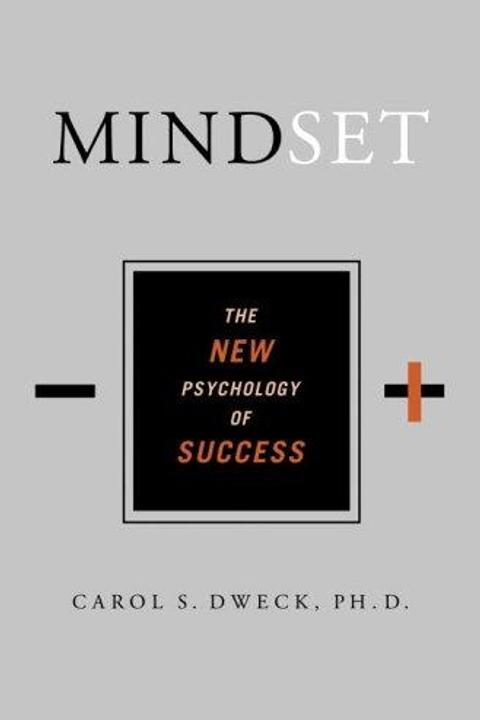
Mindset: The New Psychology of Success
by Carol S. Dweck
Why read this book
- It names a single distinction, fixed vs. growth mindset, that reframes how you read your own reactions to failure and difficulty.
- The research on praising effort over intelligence is directly useful for parents, teachers, and managers.
- It's an easy read built on decades of actual studies, not just anecdotes.
- The core idea has spread far enough that it's worth knowing the original argument rather than the watered-down version.
In one sentence
Carol Dweck's argument that whether you believe ability is fixed or can grow shapes how you handle effort, failure, and challenge, and changing that belief changes outcomes.
Key takeaways
- The central distinction: a fixed mindset assumes ability is a set trait you either have or don't; a growth mindset assumes ability can be developed through effort and learning. The two beliefs lead to different behavior in the same situation.
- Effort: in a fixed mindset, needing to try hard signals you lack talent, so effort feels like a threat. In a growth mindset, effort is how ability gets built, so it's the point, not an admission of weakness.
- Failure: a fixed mindset treats failure as a verdict on who you are. A growth mindset treats it as information about what to work on next.
- Challenge: a fixed mindset avoids hard challenges that risk exposing limits. A growth mindset seeks them out because that's where growth happens.
- Praise matters more than it looks. Praising intelligence ("you're so smart") pushes kids toward a fixed mindset and risk-avoidance; praising effort and strategy builds resilience.
- Mindset isn't fixed itself. People hold different mindsets in different areas, and the belief can be changed, which is the practical payoff of the book.
- "The view you adopt for yourself profoundly affects the way you lead your life." Beliefs about ability aren't just background noise; they steer the choices you make.
- The growth mindset can be misread as just "praise effort and everyone wins." Dweck has pushed back on that; effort matters, but so do strategies, feedback, and actually learning from what isn't working.
Summary
Mindset rests on one distinction. Dweck, a Stanford psychologist, spent decades studying how people respond to failure and found the responses split along a belief: do you think your basic abilities are fixed, or do you think they can grow? She calls these the fixed mindset and the growth mindset, and most of the book is showing how that single belief plays out across school, sport, business, relationships, and parenting.
In a fixed mindset, ability is a fixed quantity you're trying to prove you have. Every situation becomes a test of whether you're smart or talented enough. That makes effort suspect (if you were really good you wouldn't need to try), failure devastating (it's proof you lack the trait), and hard challenges something to avoid (why risk exposing the limit?). In a growth mindset, ability is something you build. Effort is the mechanism, failure is feedback, and challenge is the place where the growth actually happens.
The most cited research in the book is about praise. When children were praised for being smart, they later avoided harder problems and crumbled after setbacks, because the label was now something to protect. When children were praised for effort and strategy, they chose harder problems and kept going. The lesson generalizes: how we talk to people about their successes shapes whether they stay curious or get defensive.
Dweck applies the frame widely, sometimes more convincingly than others. The parenting, teaching, and coaching chapters tend to land; some of the business and relationship examples read more like illustrations than evidence. The book's strength is also its risk: one idea, repeated across many domains, can start to feel like it explains everything. Dweck has since acknowledged a "false growth mindset," where people reduce the idea to cheerleading about effort while ignoring that the point is to learn, not just to try.
The practical takeaway is that mindset isn't a fixed trait, which would be self-defeating. You can notice your fixed-mindset reactions, especially the defensive ones around failure, and deliberately reframe them. That's the whole argument: the belief is changeable, and changing it changes how you act.
Reflections
The fixed-vs-growth split is one of those ideas that's easy to nod at and harder to actually catch yourself doing. The reaction worth watching for is the defensive one after failing at something: treating it as proof you're "not a math person" or "not a sales person" is the fixed-mindset move in real time. What makes the framing useful rather than just motivational is Dweck's own correction, the "false growth mindset," which keeps it honest. Effort alone isn't the point; learning from what isn't working is. That's the version worth keeping.
“"Becoming is better than being."”
— Carol S. Dweck
Who should read this
- Parents, teachers, and coaches who shape how kids and learners respond to difficulty.
- Managers building feedback and review habits, where praising effort over innate talent matters.
- Anyone who notices they avoid hard things to protect a self-image of being "smart" or "talented."
- Skip it if you already know the fixed-vs-growth distinction well; the core idea fits in a long article, and the book repeats it across many examples.
Favorite quotes
- "Becoming is better than being."
- "The view you adopt for yourself profoundly affects the way you lead your life."
- "Why waste time proving over and over how great you are, when you could be getting better?"
- "No matter what your ability is, effort is what ignites that ability and turns it into accomplishment."
FAQ
What is the difference between fixed and growth mindset?
A fixed mindset assumes your abilities are set traits you can't change; a growth mindset assumes abilities can be developed through effort, strategy, and learning. The two beliefs lead to different responses to effort, failure, and challenge.
What is the main idea of Mindset by Carol Dweck?
That your belief about whether ability is fixed or can grow shapes how you handle setbacks and success, and that shifting toward a growth mindset improves how you learn and perform.
How does a growth mindset view failure?
As information and feedback about what to work on next, rather than as a verdict on who you are.
Why does Dweck say you shouldn't praise children for being smart?
Praising intelligence pushes kids to protect that label by avoiding risk; praising effort and strategy builds persistence and resilience.
Is Mindset by Carol Dweck worth reading?
Yes if the fixed-vs-growth distinction is new to you, especially for parenting, teaching, or coaching. The core idea is simple enough that the book can feel repetitive once you've grasped it.
What is a "false growth mindset"?
Dweck's term for reducing the idea to praising effort alone, while ignoring that the real point is to learn from feedback and find better strategies, not just to try hard.
Detailed Notes
- Core distinction: a fixed mindset treats abilities as set traits to be proven; a growth mindset treats them as things developed through effort and learning. Same situation, opposite responses.
- Effort: a fixed mindset reads needing effort as evidence of low ability, so effort feels threatening; a growth mindset sees effort as the mechanism that builds ability.
- Failure: a fixed mindset reads it as a verdict on identity; a growth mindset reads it as feedback.
- Challenge: a fixed mindset avoids it to protect the self-image; a growth mindset seeks it, because that's where growth happens.
- The praise research: children praised for intelligence later avoided harder tasks and crumbled after setbacks (protecting the label); children praised for effort and strategy chose harder tasks and persisted.
- It's domain-specific and changeable: mindset isn't one fixed trait — it varies by area and can shift. That's the practical hook.
- Applications: school, sport, business, parenting, and relationships — though the parenting, teaching, and coaching cases land harder than the business ones.
- The "false growth mindset": Dweck's own later correction — the idea gets flattened into just praising effort, while ignoring strategy and learning.
- Anchor quotes: "Becoming is better than being." And: "The view you adopt for yourself profoundly affects the way you lead your life."