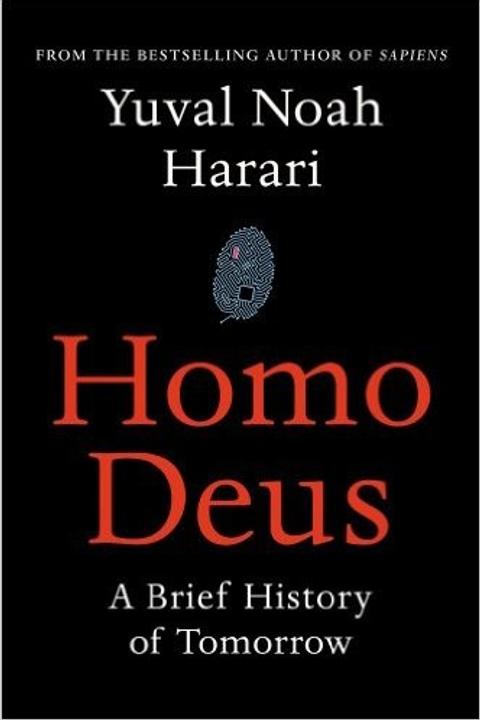
Homo Deus by Yuval Noah Harari: Summary & Notes
by Yuval Noah Harari
In one sentence
Having largely solved famine, plague, and war, humanity's next projects are immortality, happiness, and god-like power — and along the way, data and algorithms may end up mattering more than individual human experience.
Key takeaways
- Humanity has largely solved famine, plague, and war — for the first time in history, more people die from obesity than from starvation, more from old age than from infectious disease, and more from suicide than from war and terrorism combined. Having solved these, humanity's next agenda items become immortality, happiness, and divine-like power.
- "Dataism" is Harari's name for an emerging worldview that treats the universe as a flow of data, and judges anything — an organism, a company, a political system — by how well it processes information. Taken to its extreme, Dataism values the flow of data itself over individual human experience.
- Liberal humanism rests on the idea that individual feelings and free choices are the ultimate source of meaning and authority. Harari argues this premise is under threat as biotech and AI develop the ability to understand, predict, and manipulate our choices better than we understand them ourselves.
- The "useless class" is Harari's term for a possible future in which large numbers of people lose economic and military value as AI and automation take over both physical and cognitive labor — a break from history, where every human had at least some economic and military utility.
- As algorithms increasingly out-perform human judgment (in medicine, driving, hiring, even choosing a partner), authority may quietly shift from individual humans to external systems — not through some dramatic AI takeover, but because we keep handing decisions to systems that get better results.
- Harari is explicit that Homo Deus describes possibilities, not prophecies — the point of the book is to widen the range of futures we're paying attention to, so we can choose the future we actually want rather than sleepwalk into the one that's simply the path of least resistance.
Summary
I've read this one twice — first in 2019, then again in 2022 — and rated it 8/10 both times through.
It's the sequel to Sapiens, and it swaps "how did we get here" for "where are we going," walking through Dataism, the erosion of liberal humanism, and what happens to human relevance once algorithms out-predict us.
It's the kind of book that's less about answers and more about making sure you're asking the right questions before the future arrives.
Reflections
What stays with me from Homo Deus isn't any single prediction — Harari is careful to frame the book as a map of possibilities, not a forecast — it's the reframing of what "progress" has actually bought us. Famine, plague, and war used to be the default condition of being alive. We've functionally solved all three, and the book's real question is what a species does with itself once the ancient problems stop being the organizing threat.
The idea I keep turning over is Dataism: the notion that once you can describe a system well enough as data flow, you start judging it by how well it processes information rather than by how it feels from the inside. Applied to an economy or a bureaucracy, that's not new. Applied to a human life, it's unsettling — because it implies your feelings are just another algorithm's output, one that a better algorithm could eventually out-predict.
That's also where the book is most useful outside of politics or AI policy. Liberal humanism assumes your gut read on what you want is the final word. Harari's point is that recommendation engines, health trackers, and now language models are all in the business of predicting your choices before you consciously make them, and that changes the trust you can place in "just following your feelings" as a decision-making method. I don't think the book hands you a tidy answer for what to do about that. It's better read as a prompt to notice how much of your own decision-making is already outsourced to a screen.
Who should read this
- Anyone who read and enjoyed Sapiens and wants Harari's follow-up argument about where the same historical lens points next.
- Anyone thinking seriously about AI, automation, and what happens to work and meaning as machines get better at prediction than people.
- Readers interested in the philosophy of mind and free will — the book's core argument is really about consciousness, choice, and whether "the self" survives being modeled well enough by an algorithm.
- Anyone who wants big-picture, zoomed-out thinking about technology's long-term trajectory rather than a here's-what-to-do-Monday-morning tech book.
Favorite quotes
- "Science is converging on an all-encompassing dogma, which says that organisms are algorithms and life is data processing."
- "Intelligence is decoupling from consciousness. Non-conscious but highly intelligent algorithms may soon know us better than we know ourselves."
- "The crucial problem isn't creating new jobs. The crucial problem is creating new jobs that humans perform better than algorithms."
- "For the first time in history, more people die from eating too much than from eating too little; more people die from old age than from infectious diseases; and more people commit suicide than are killed by soldiers, terrorists, and criminals combined."
FAQ
What is Homo Deus about?
Homo Deus is Yuval Noah Harari's follow-up to Sapiens, and it looks forward instead of back. Harari argues that humanity has largely solved the three problems that dominated most of history — famine, plague, and war — and asks what a species chases once those threats recede. His answer: immortality, happiness, and increasingly god-like power over life itself, aided by biotechnology and artificial intelligence.
What is Dataism?
Dataism is the term Harari uses for an emerging worldview that treats the entire universe — including human bodies and minds — as data-processing systems, and judges value by how well something contributes to the overall flow of data. Harari presents it as a possible successor ideology to humanism: instead of "listen to your feelings," the guiding principle becomes "listen to the algorithm," because the algorithm processes more data than you ever could.
Is Homo Deus a sequel to Sapiens?
Yes. Sapiens covers roughly 70,000 years of human history up to the present. Homo Deus picks up where that leaves off and looks forward, using the same big-picture, myth-and-cooperation framework to ask where technology, biotech, and AI might take our species next.
What is the 'useless class' in Homo Deus?
The "useless class" is Harari's term for a possible future population of people who lose economic and military value because AI and automation can do their jobs and, eventually, fight wars, better than they can. Historically every human had some baseline value as a worker or a soldier. Harari's concern is that this floor disappears once machines outperform humans at both physical and cognitive tasks, raising hard questions about purpose, welfare, and inequality.
Is Homo Deus worth reading if I've read Sapiens?
Yes — they're designed as a pair. Sapiens explains how Homo sapiens became the dominant species; Homo Deus asks what that dominant species does next, and specifically what happens to human agency and meaning as algorithms get better at understanding us than we understand ourselves. If you found Sapiens's zoomed-out style compelling, Homo Deus applies the same approach to the future instead of the past.
Does Homo Deus predict a specific future?
No — Harari is explicit that the book maps possibilities, not prophecies. The scenarios around Dataism, the useless class, and algorithmic authority are presented as directions we could plausibly head in given current trends, not fixed predictions, and part of his stated goal is to widen the range of futures people are willing to consider and debate.
Detailed Notes
Click to expand the full detailed notes →
Detailed Notes
Click to expand the full detailed notes →
Structure of the Book
Homo Deus is organized into an introductory chapter and three parts. The introduction, "The New Human Agenda," lays out the shift from historic survival threats to new pursuits. Part One, "Homo Sapiens Conquers the World," revisits (briefly) how Sapiens became the dominant species through large-scale cooperation built on shared myths. Part Two, "Homo Sapiens Gives Meaning to the World," traces how religion and, later, humanism became the dominant sources of meaning and authority. Part Three, "Homo Sapiens Loses Control," is where the book turns toward AI, biotechnology, and Dataism, and argues that liberal humanism's authority may be quietly displaced by systems that out-predict human judgment.
The New Human Agenda
Harari opens with a historical claim: for most of human history, famine, plague, and war were the default conditions of life, largely outside human control. He argues all three have been brought substantially under control in the last century — not eliminated, but transformed from "natural forces beyond our command" into manageable problems. His often-cited illustration: more people today die from obesity-related disease than from starvation, more die from old age than from infectious disease, and more die by suicide than are killed by war, terrorism, and crime combined.
Having tamed the ancient triad, Harari argues, humanity's attention naturally moves to new, more ambitious projects: overcoming death itself (immortality, or at least radically extended life), engineering happiness directly rather than chasing the circumstances that produce it, and acquiring god-like powers to create and redesign life through biotechnology and genetic engineering — the "Homo Deus" of the title.
Humanism as a Religion
A large stretch of the book is about meaning-making, not technology. Harari treats humanism — the idea that human feelings and free choices are the ultimate source of meaning, morality, and political authority — as a kind of religion, one that displaced traditional theistic religion over the last few centuries. He distinguishes three strands: liberal humanism (each individual's inner voice matters and should be free to choose), socialist humanism (the collective matters more than any individual's feelings), and evolutionary humanism (some humans/cultures are more evolved and should be favored, the strand the Nazis took to its horrific extreme).
Liberal humanism — "follow your heart," "the customer is always right," "trust the voter" — is presented as the version that won out in most of the modern world. Democracy, human rights, free-market economics, and modern art all lean on the same premise: that individual human experience is the final authority on what's good, true, or beautiful.
Homo Sapiens Loses Control
This is the book's central argument. Harari contends that liberal humanism's authority depended on a specific historical condition: no external system could understand or predict a person's choices better than the person themselves, so it made sense to treat individual feelings as the final word. He argues that condition is ending. Biometric sensors, machine learning, and large-scale behavioral data increasingly let algorithms model a person's preferences, health, and likely decisions more accurately than introspection can.
As that happens, Harari argues authority quietly migrates from the individual to the algorithm — not through a dramatic coup, but through countless small, reasonable-seeming handoffs: letting a navigation app choose your route, a recommendation engine choose your next purchase or show, a matching algorithm suggest a partner, a diagnostic model flag a disease before symptoms are felt. Each handoff is individually sensible because the algorithm gets better results. Cumulatively, they erode the premise that your own feelings are the most reliable guide to your own life.
Dataism
Harari names the logical endpoint of this trend Dataism: a worldview in which the universe is understood as a flow of data, organisms (including humans) are algorithms for processing that data, and the ultimate measure of value is how well something contributes to the overall data flow — not how it feels to be that organism. He frames Dataism as a candidate successor to humanism in the same way humanism displaced theism: a new story about where authority and meaning come from.
He's careful to note this is presented as a current scientific and cultural tendency worth taking seriously, not a settled fact or a preference of his own — the point is to notice the direction certain trends in science, tech, and economics are already pulling us, and to ask what we lose if Dataism wins by default rather than by informed choice.
The Useless Class
On the economic and political side, Harari raises the possibility of a "useless class": people whose labor, in a world of advanced AI and automation, is worth less than the cost of replacing them with a machine — a genuine historical break, since even in the most unequal societies of the past, ordinary people retained some economic and military value (as workers, soldiers, or consumers) that gave them leverage. He pairs this with a warning about a possible split between a small enhanced elite (with access to biotech upgrades) and a much larger population left behind, and treats the resulting questions of purpose, inequality, and welfare as some of the most urgent — and least resolved — implications of the technology already in development.
How the Book Frames Its Own Predictions
Harari repeatedly flags that Homo Deus is meant to describe possibilities, not certainties. The scenarios involving Dataism, the useless class, and algorithmic authority are framed as plausible extensions of current trends rather than fixed prophecies. The stated purpose is to broaden the range of futures under public discussion, on the theory that a future arrived at by default — because no one debated the alternatives — is worse than one chosen deliberately.