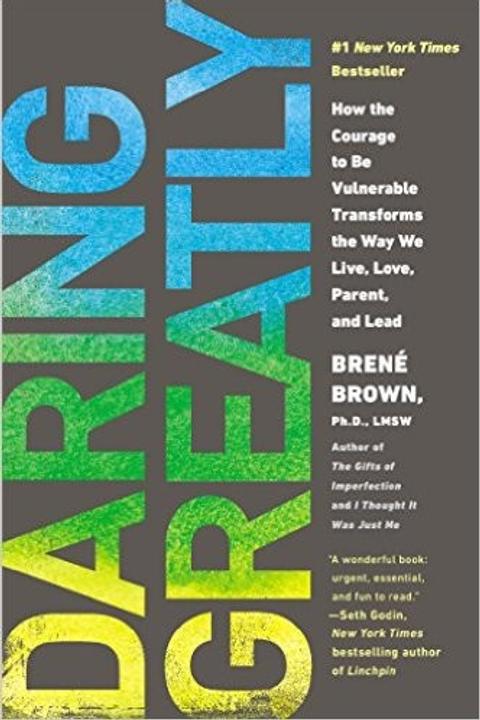
Daring Greatly by Brené Brown: Summary & Notes
by Brené Brown
In one sentence
Vulnerability isn't weakness — Brené Brown argues it's the birthplace of courage, creativity, and connection, and the thing our armor of perfectionism and numbing keeps us from ever fully using.
Key takeaways
- Vulnerability is not weakness — Brown defines it as uncertainty, risk, and emotional exposure, and argues it's the source of love, belonging, creativity, and courage, not the opposite of them.
- Shame says "I am bad," guilt says "I did something bad" — guilt, tied to behavior rather than identity, is the more constructive emotion, since it's possible to fix a behavior but much harder to fix a self.
- "Scarcity culture" is the pervasive sense of never enough — not thin enough, not successful enough, not certain enough — and it runs on three fuels: shame, comparison, and disengagement.
- We armor up against vulnerability with perfectionism, numbing, and "foreboding joy" (bracing for loss the moment something good happens) — all of which trade full engagement with life for a false sense of safety.
- "Wholehearted living" means showing up and being seen even without guarantees of the outcome — engaging from a place of worthiness instead of proving yourself worthy first.
- The book's title comes from Theodore Roosevelt's 1910 "Man in the Arena" speech — credit belongs to the person actually in the arena, not the critic watching from the stands.
Summary
Daring Greatly (2012) is Brené Brown's argument that vulnerability — the willingness to show up and be seen with no guarantee of outcome — is not a weakness to manage but the foundation of courage, creativity, and genuine connection.
Drawing on more than a decade of research into shame and vulnerability, Brown maps the ways people armor themselves against exposure (perfectionism, numbing, cynicism, always being "in control") and what it costs them: joy, intimacy, and the ability to do meaningful work.
The book applies this framework across parenting, leadership, and relationships, built around the idea of "wholehearted living" — engaging with life from a place of worthiness rather than waiting to earn it.
Reflections
The distinction between shame and guilt is the most immediately useful idea in the book, and probably the most quoted for a reason: "I am bad" and "I did something bad" produce completely different behavior. Shame tends to make people hide or lash out; guilt, because it's about an action rather than an identity, is something a person can actually act on and repair.
The Roosevelt "Man in the Arena" framing does a lot of work for the book's argument, mostly because it reframes criticism from the sidelines as fundamentally lower-stakes than the discomfort of actually trying. It's a useful check against the modern version of that same critic, dressed up as a comment section.
"Foreboding joy" is a sharp piece of naming for something a lot of people recognize once it's pointed out — the reflex to brace for the other shoe the moment something good happens. Brown's research-driven, list-heavy structure (a signature of her work generally) makes the ideas easy to extract, though it can read as more prescriptive than a single overarching argument.
Who should read this
- Leaders and managers who want their teams to take real risks instead of just looking busy
- Anyone whose perfectionism or fear of failure is quietly limiting what they attempt
- Parents interested in raising kids who can tolerate failure and setbacks
- Readers curious about the research behind Brown's popularized ideas on shame and vulnerability
- Anyone who recognizes themselves in "numbing" behaviors and wants a framework for naming them
Favorite quotes
- Vulnerability is the birthplace of love, belonging, joy, courage, empathy, and creativity. It is the source of hope, empathy, accountability, and authenticity.
- Vulnerability sounds like truth and feels like courage. Truth and courage aren't always comfortable, but they're never weakness.
- It is not the critic who counts... The credit belongs to the man who is actually in the arena... who at the best knows in the end the triumph of high achievement, and who at the worst, if he fails, at least fails while daring greatly. (Theodore Roosevelt, quoted in the book's epigraph)
- We cannot selectively numb emotions. When we numb the painful emotions, we also numb the positive emotions.
- When we spend our lives waiting until we're perfect or bulletproof before we walk into the arena, we ultimately sacrifice relationships and opportunities that may not be recoverable, we squander our precious time, and we turn our backs on our gifts.
FAQ
What is Daring Greatly about?
Daring Greatly argues that vulnerability — showing up and being seen without a guarantee of the outcome — is not weakness but the source of courage, creativity, and connection. Brené Brown maps the ways people armor themselves against that exposure and what it costs them in relationships, parenting, and leadership.
What is the difference between shame and guilt in Daring Greatly?
Brown draws a sharp line: shame is the feeling of "I am bad," tied to identity, while guilt is "I did something bad," tied to behavior. Guilt is more constructive because a behavior can be changed and repaired; shame tends to make people hide, deflect, or lash out instead.
What is the 'Man in the Arena' quote?
It's a passage from Theodore Roosevelt's 1910 speech "Citizenship in a Republic," which argues that credit belongs to the person actually competing and risking failure, not the critic watching safely from the stands. Brown uses it as the epigraph and title source for Daring Greatly — to "dare greatly" is to enter the arena despite the risk of failing publicly.
What is scarcity culture in Daring Greatly?
Scarcity is Brown's term for the pervasive belief that we're never enough — not thin enough, not successful enough, not certain enough. She argues it runs on three ingredients: shame, comparison, and disengagement, and that the opposite of scarcity isn't abundance but simply believing you're "enough."
What is 'foreboding joy' in Daring Greatly?
Foreboding joy is Brown's term for the reflex to brace for loss or disappointment the moment something good happens, as a defense against being caught off guard by pain. She argues the fix is practicing gratitude in the moment rather than pre-emptively numbing the joy.
Is Daring Greatly worth reading?
Yes, for leaders, parents, and anyone whose perfectionism or fear of failure is limiting what they're willing to attempt. It's one of the more accessible entry points into Brown's shame and vulnerability research, organized in a practical, example-driven way rather than as dense academic writing.
Detailed Notes
Click to expand the full detailed notes →
Detailed Notes
Click to expand the full detailed notes →
What "Daring Greatly" Means
The title comes from Theodore Roosevelt's 1910 speech "Citizenship in a Republic," often called "The Man in the Arena." Roosevelt argued that credit belongs to the person actually competing and risking public failure — not the critic pointing out how the competitor could have done better from the safety of the stands.
Brown uses that framing as the spine of the book: "daring greatly" means showing up and trying, even in front of an audience, with no guarantee you'll succeed. It reframes vulnerability from a liability into the price of admission for anything that matters — creative work, leadership, love, parenting.
Vulnerability Is Not Weakness
Brown defines vulnerability as uncertainty, risk, and emotional exposure — not oversharing, not weakness, and not something reserved for the emotionally fragile. Her research led her to a counterintuitive finding: the people she interviewed who reported the strongest sense of love and belonging were also the ones most willing to talk about the discomfort of being vulnerable.
The book pushes back on several common myths about vulnerability:
- Vulnerability is not weakness — it is truth and courage, which are often uncomfortable but are not the same thing as being weak.
- Vulnerability is not optional — everyone experiences it; the only choice is whether to engage with it or armor against it.
- Vulnerability is not the same as "letting it all hang out" — it is not indiscriminate disclosure, but sharing with appropriate boundaries.
- Vulnerability is not a solo activity — it happens in connection with other people, which is exactly what makes it risky.
Shame vs. Guilt
This distinction is one of the book's most cited ideas. Shame is the feeling "I am bad" — it attacks identity and tends to make people want to hide, attack back, or disappear. Guilt is the feeling "I did something bad" — it is about behavior, not identity, which makes it something a person can actually act on.
Because guilt is tied to a specific action, it is repairable: you can apologize, change the behavior, make amends. Shame, by contrast, thrives in secrecy, silence, and judgment, and Brown argues that the antidote to shame is speaking it out loud to someone who responds with empathy.
Scarcity Culture: "Never Enough"
Brown describes modern culture as running on scarcity — the constant, background sense that we are never good enough, thin enough, successful enough, certain enough, extraordinary enough. She names three ingredients that fuel it: shame, comparison, and disengagement.
The opposite of scarcity, in her framing, is not abundance. It is simply the belief that you are "enough" as you are — which she argues is a decision made and remade, not a permanent state achieved once.
The Armor: How We Protect Against Vulnerability
Because vulnerability feels risky, Brown argues people build armor to avoid it — and that armor, while it feels protective, tends to also block out joy, connection, and creativity. Recurring forms of armor in the book include:
- Perfectionism — using achievement and control as a shield, believing that if you do everything right, you can avoid shame or judgment.
- Numbing — using distraction, busyness, or substances to avoid feeling difficult emotions, which Brown argues also blunts positive ones, since you cannot selectively numb.
- Foreboding joy — bracing for loss the moment something good happens, as a pre-emptive defense against being caught off guard by pain.
- Cynicism and criticism — staying in the stands as a critic rather than risking failure in the arena.
Wholehearted Living
Brown's term for the alternative to armored living is "wholehearted living" — engaging with the world from a place of worthiness rather than waiting to prove yourself worthy first. It means being willing to be seen, to try, and to fail in public, because the alternative — staying safely armored — costs more in the long run: squandered time, missed relationships, and gifts never offered because they might not be perfect.
Applying the Ideas: Parenting, Leadership, and Relationships
Brown applies the vulnerability and shame research across several domains. In parenting, she argues that shielding children from all struggle and failure denies them the chance to build "shame resilience" — the ability to recognize shame, question the messages behind it, and reach out rather than hide. In leadership, she argues that daring greatly means creating cultures where people can take risks, admit mistakes, and ask for help without being shamed for it — the opposite of a culture that only rewards certainty and invulnerability.