Why read this book
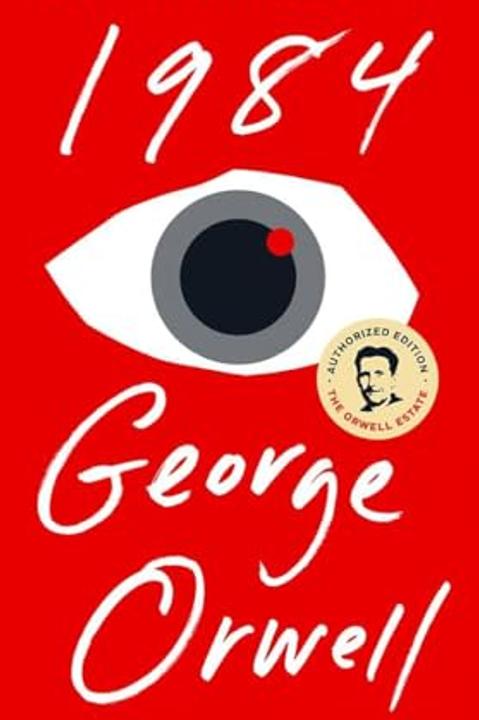
- It defined the vocabulary we still use to talk about surveillance and propaganda — Big Brother, doublethink, Newspeak, the memory hole, thoughtcrime all come from this book.
- It's a serious argument about how totalitarian power actually works, dressed as a novel: control the past, control the language, and you control thought itself.
- Orwell takes the idea further than most political writing dares, to the point where the regime doesn't just want obedience, it wants you to genuinely love what is destroying you.
- It's bleak but not lazy — the ending refuses the comfort of a heroic last stand, which is exactly what makes the warning land.
In one sentence
George Orwell's portrait of a totalitarian state that controls not just behavior but reality itself, following one man's doomed attempt to hold onto an independent thought in a world built to erase it.
Key takeaways
- Totalitarianism is about controlling reality, not just behavior. The Party isn't satisfied with obedience; it wants to dictate what is true, including the past and the evidence of your own senses.
- Doublethink is the mental skill the system runs on: holding two contradictory beliefs at once and accepting both — knowing the truth while sincerely believing the lie. It's how a person stays loyal to a regime that constantly contradicts itself.
- Language is a tool of control. Newspeak is designed to shrink the range of expressible thought; if there's no word for freedom or rebellion, the reasoning goes, the idea itself becomes harder to even form.
- Control of the past is control of the present. History is continuously rewritten and inconvenient facts are dropped down the "memory hole," so there's no fixed record to measure the Party's lies against.
- Surveillance works by uncertainty. The telescreen might be watching at any moment, so you behave as if it always is. Big Brother's power comes as much from never being sure as from actually being seen.
- The proles are both the only hope and the reason there's no hope. The masses have the numbers to overturn the Party but no consciousness of their power, and the system is built to keep it that way.
- Power is the point, not a means to an end. O'Brien's chilling claim is that the Party seeks power purely for its own sake — "a boot stamping on a human face — forever" — not for wealth, security, or any higher goal.
- Rebellion is crushed completely, not just defeated. Room 101 doesn't only break Winston's body; it makes him betray the one thing he loved and end up genuinely loving Big Brother. The regime wins the inside, not just the outside.
Summary
1984 is set in Oceania, a superstate ruled by the Party and its omnipresent figurehead, Big Brother. Winston Smith works at the Ministry of Truth, where his job is to rewrite old newspaper articles so the historical record always matches the Party's current claims. He is a small, ordinary man with one dangerous habit: he still believes there is such a thing as objective truth, and he quietly hates the world he lives in. The novel follows his attempt to act on that hatred — through a forbidden diary, a love affair with a younger woman named Julia, and contact with what he believes is an underground resistance.
What makes the book more than a thriller is Orwell's argument about how this kind of power actually operates. The Party doesn't just punish dissent; it tries to make dissent impossible to think. Through doublethink, citizens learn to hold contradictory beliefs at once and accept both. Through Newspeak, the language itself is pared down until heretical ideas have no words to live in. Through the constant rewriting of history and the memory hole, there is no stable past to appeal to — if the Party says it was always at war with Eastasia, then it was, and any contrary memory is the error. Truth becomes whatever the Party currently asserts.
Surveillance saturates everything. Telescreens watch and listen in homes and workplaces, children inform on parents, and the slogan "Big Brother is watching you" turns private life into a performance of loyalty. Below the Party sit the proles, the vast working majority, who have the raw numbers to overthrow the system but no awareness of it — Winston pins a flicker of hope on them, while the structure of the society guarantees they stay sedated and unaware.
The final act dismantles any hope the reader was holding. Winston and Julia are caught, and the man Winston trusted, O'Brien, turns out to be his torturer. The point of the torture is not information or even punishment; it's conversion. The Party doesn't want to kill Winston while he still hates it — it wants him to love Big Brother first. In Room 101, confronted with his deepest fear, Winston finally breaks and betrays Julia, the one loyalty he swore he'd keep. He is released, hollowed out, and the book ends with him genuinely, contentedly loving the thing that destroyed him. The horror is not that the rebel dies, but that the rebellion is erased from the inside.
Reflections
The idea that's stayed with me is that the deepest form of control isn't over what you do but over what you can think. Most stories about tyranny imagine a free mind trapped in an unfree world, waiting for its chance. Orwell's nightmare is worse: a system that reaches into the mind itself, so that there's no untouched inner self left to do the rebelling.
Doublethink and Newspeak are the two mechanisms that make this plausible rather than melodramatic — control the language and the record, and you've moved the fight from "can I act" to "can I even hold the thought."
The ending is the part that earns the book its reputation. A version where Winston dies defiant would be comforting and, by Orwell's logic, dishonest; the point is that the Party isn't satisfied until the resistance is gone from the inside. It's a hard book to call enjoyable, but it's a clarifying one, and the vocabulary it gave us is still doing real work.
“"Who controls the past controls the future: who controls the present controls the past."”
— George Orwell
Who should read this
- Anyone who wants to understand where the now-everyday words — Orwellian, Big Brother, doublethink — actually come from, and what they originally meant.
- Readers interested in how propaganda, surveillance, and information control work as a system rather than as isolated abuses.
- People who like political fiction that argues honestly, including following its own logic to a genuinely bleak conclusion.
- Skip it if you want an uplifting story or a hero who wins; the book is deliberately, structurally hopeless, and that's the source of its power.
Favorite quotes
- "War is peace. Freedom is slavery. Ignorance is strength."
- "Big Brother is watching you."
- "Who controls the past controls the future: who controls the present controls the past."
- "Perhaps a lunatic was simply a minority of one."
- "Freedom is the freedom to say that two plus two make four. If that is granted, all else follows."
FAQ
What is 1984 about?
It's a dystopian novel about Oceania, a totalitarian state ruled by the Party and Big Brother, that controls its citizens through surveillance, propaganda, and the manipulation of truth and language. It follows Winston Smith's doomed attempt to think and live freely.
What is doublethink?
The ability to hold two contradictory beliefs in your mind at the same time and accept both of them — to know the truth while sincerely believing the lie the Party requires. It's the mental discipline that lets people stay loyal to a regime that constantly contradicts itself.
What is Newspeak?
The Party's deliberately shrinking language. By removing words and narrowing meaning, Newspeak is designed to make heretical thoughts harder to form — the idea being that if there's no word for freedom, the concept itself becomes harder to think.
What is the memory hole?
A slot used to incinerate documents that contradict the Party's current version of events. It's Orwell's image for the continuous rewriting of history: inconvenient facts simply disappear, leaving no record to challenge the official story.
What is Room 101?
The torture chamber in the Ministry of Love that contains "the worst thing in the world" — whatever a particular prisoner fears most. It's where the Party breaks Winston not just physically but completely, forcing him to betray Julia and finally love Big Brother.
Why does 1984 end the way it does?
The bleak ending is the point. The Party's goal isn't to kill its enemies but to convert them, so Winston's total surrender — ending up loving Big Brother — shows that the regime conquers the inner mind, not just outward behavior. A heroic last stand would have softened the warning.
Detailed Notes
Click to expand the full detailed notes →
Detailed Notes
Click to expand the full detailed notes →
- The Party and totalitarian control: Oceania is ruled by the Party, which seeks total control not just of action but of reality. The goal isn't merely obedience; it's to dictate what is true, including the past and the evidence of one's own senses. The three slogans — "War is peace. Freedom is slavery. Ignorance is strength." — capture a regime that governs through contradiction.
- Doublethink: the core mental discipline of the society. Citizens learn to hold two contradictory beliefs at once and accept both — to know the real truth while sincerely believing the official lie. It's what allows loyalty to a Party that constantly reverses its own positions.
- Newspeak: the Party's shrinking, engineered language. By deleting words and narrowing meaning, it aims to make dissenting thought harder to form. "Freedom is the freedom to say that two plus two make four" — and Newspeak exists to take even that away.
- The memory hole and control of the past: Winston's job at the Ministry of Truth is to rewrite history so the record always matches the Party's current line. Contradictory documents are dropped down the memory hole and burned. With no fixed past to appeal to, there's nothing to measure the Party's lies against. "Who controls the past controls the future: who controls the present controls the past."
- Big Brother and surveillance: telescreens watch and listen everywhere, children inform on parents, and "Big Brother is watching you" turns private life into a constant performance of loyalty. The power lies in uncertainty — you can never be sure you're not being watched, so you behave as if you always are.
- The proles: the working majority who hold the numbers to overthrow the Party but none of the consciousness. Winston pins a faint hope on them — "If there is hope, it lies in the proles" — while the system is built precisely to keep them unaware of their own power.
- Power for its own sake: O'Brien explains that the Party seeks power purely as an end, not as a means to wealth or security. His image of the future is "a boot stamping on a human face — forever." This strips away the usual rationalizations of tyranny and presents domination as the entire point.
- Room 101 and the futility of Winston's rebellion: Winston's revolt — the diary, Julia, the supposed resistance — is allowed to run only so it can be crushed completely. In Room 101 he is broken not just physically but inwardly, made to betray Julia and finally to love Big Brother. The defeat is total because the Party conquers the mind, not only the body. "Perhaps a lunatic was simply a minority of one" — and against the Party, the minority of one always loses.