I Quit My PM Job 6 Months Ago — Here's What Actually Happened
I left a comfortable PM role to build my own thing. Six months in — what's worked, what's been harder than expected, and why I'd do it again.
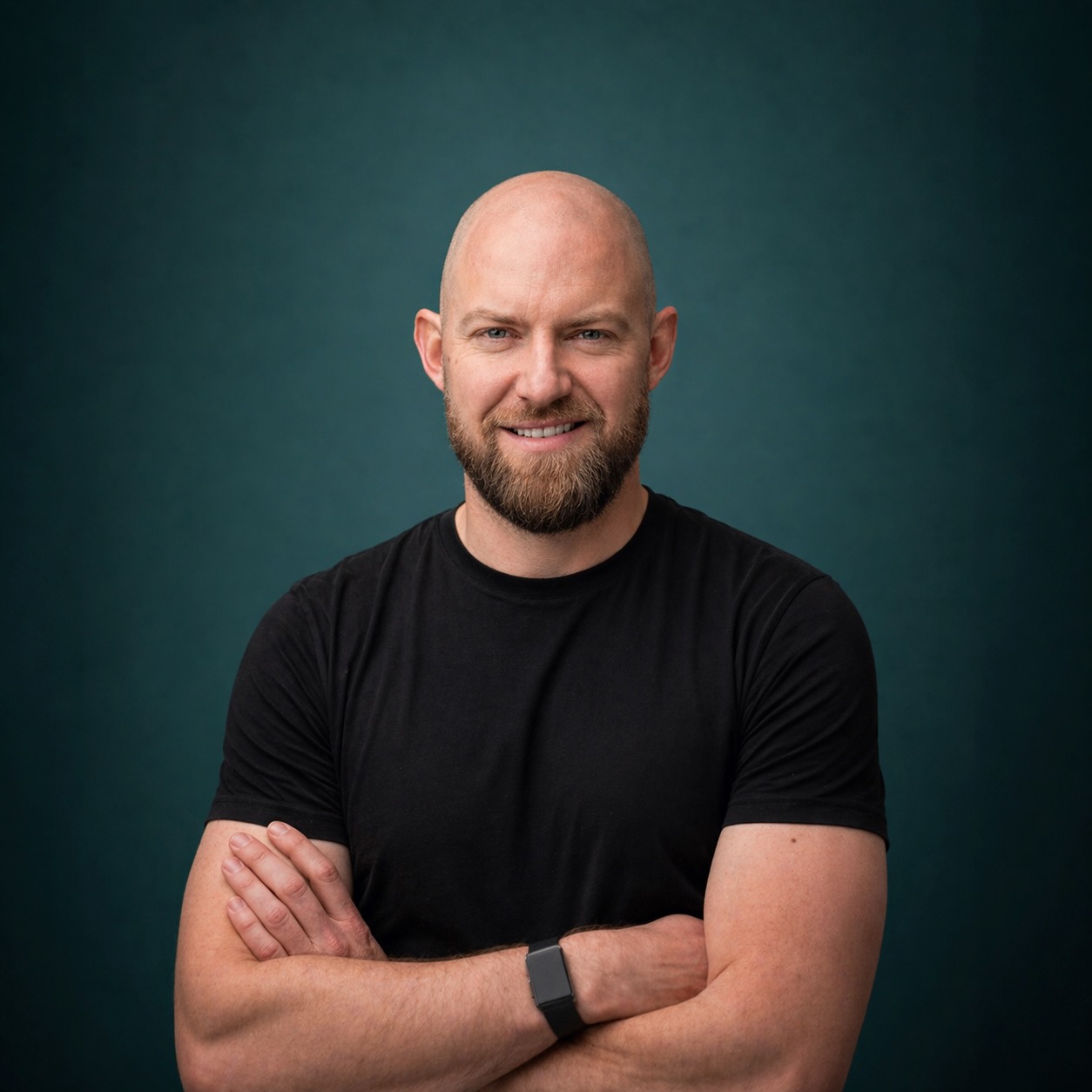 ByGraham Mann7-min read
The decision wasn't obvious.
I was leaving a company I liked, a team I respected, flexible 4-day weeks, and a salary that made life comfortable. On paper, there was no reason to leave.
But I'd been in the role for almost four years. At the company for over six. And somewhere along the way, the excitement had faded.
I've always optimized my career for learning. When I'm learning fast, I'm engaged. When I'm not, I notice. And I'd started to notice.
Trips back to the Montreal office used to energize me. At some point, they stopped. I'd sit in meetings and realize I wasn't as present as I used to be. The company's momentum had shifted too — not anyone's fault, just the natural rhythm of a startup maturing. But the environment that had pulled so much out of me in the early years wasn't pulling the same way anymore.
I was also juggling too much. A construction project. A growing obsession with AI tools that I couldn't explore properly while working full-time. Every weekend I'd think about the things I wanted to build. Every Monday I'd go back to a job that was fine, but no longer felt like the right use of my time.
Annie Duke writes in Quit that quitting on time almost always feels like quitting too early. By the time I felt ready to leave, I was probably already late.
So I quit.
The Unexpected Upside of Focus
The biggest change hasn't been what I'm working on. It's been how I'm working.
When you have one thing to focus on, day after day, momentum builds in a way that isn't possible when you're splitting attention. Context-switching is expensive, and I didn't fully appreciate how much it was costing me until I stopped doing it.
In the past six months, I've built SaaS products that work. End-to-end. Users can sign up, use the product, pay for it. Real software.
Two years ago, I couldn't have imagined doing that without a team. I studied engineering but spent my whole career on the business side. Engineering degree → Techstars → early-stage startups → growth role at a SaaS company → product manager at the same company → quit. At no point did "solo developer" seem like a realistic option.
But the tools have changed. What used to require a team of five can now be done by one person with focus and the right stack. Not an exaggeration — just what's possible if you're paying attention to how fast things are moving.
I've also learned more about AI in the past six months than I did in the previous few years combined. Not surface-level stuff — actually building with these tools, understanding their limits, developing intuition for what's coming. That knowledge compounds. I can feel it compounding.
Morgan Housel puts it well:
"We underestimate how much impact small improvements over a long period of time can have."
That's the bet I'm making. The skills I'm building now will pay off for years, even if the returns aren't visible yet.
The Build: Fast Days and Slow Months
I've been building a small office and two rental cottages on some land in Nova Scotia. The kind of project that sounds romantic until you're in it.
Some parts are genuinely fun. Framing goes up fast. You show up in the morning with a pile of lumber, and by the end of the day there's a structure standing there. That feedback loop is satisfying in a way that software rarely is.
Then there's everything else.
Trim and detailing is slow. Permitting is tedious. Nothing takes as long as you expect — it takes longer. A "quick" two-week task becomes six weeks. A $5,000 budget becomes $8,000. And that's before you account for the mental overhead of managing contractors, ordering materials, and making a hundred small decisions that each feel consequential.
Site prep alone was $25,000. Siding was another $8,000. These aren't unusual numbers for construction, but when you've spent your adult life optimizing for savings and living below your means, writing those checks is stressful. Even when you planned for it. Even when it's the right investment.
The hardest part has been switching between building and software. A day on a construction site uses different mental muscles than a day writing code. Doing both in the same week, sometimes the same day, creates a kind of fragmentation that's hard to shake.
But the office build is mostly done now. I learned a lot. And when spring comes, I'll be ready to finish the rest with a clarity I didn't have when I started.
Would I recommend it for most people? No. But thankfully I enjoy the learning and the process.
What's Been Harder Than Expected
I thought the hard part would be the work. It's not. The work is fine. The hard part is the space around the work.
Building a company from scratch is still hard, even with better tools. AI doesn't find your customers for you. It doesn't make people care about what you're building. It doesn't keep you motivated on the days when you ship something and no one notices.
There's a specific kind of loneliness that comes from working on a problem, finally solving it, and having no one to share it with. No teammate to Slack. No office to walk into. Just you, the code, and the silence.
I miss the daily interactions more than I expected. The casual conversations. The whiteboard sessions. The random jokes that break up the day. I really liked my team. I still do. And there are moments, usually mid-afternoon on a Tuesday, when I realize how much of work I enjoyed wasn't the work itself. It was the people.
The financial stress is different too. I planned for this. I have runway. But there's a psychological weight to spending money when you're not making it at the same rate.
I spent years building the habit of saving consistently. Always living below my means and watching the numbers go up. Now, for the first time, I'm watching them go the other direction. Covering my lifestyle. Paying for construction materials. Watching invoices come in that would've seemed absurd a few years ago.
It's fine. It's part of the plan. But it doesn't feel fine every day. Some weeks it feels heavy.
What I Tell Myself
Exponential growth looks slow in the beginning. If you're building something that compounds, the early results will look underwhelming. You have to stay in the game long enough to see the curve bend.
Naval Ravikant says you're not going to get rich renting out your time — you need equity, leverage, and specific knowledge.
Sam Altman put it more bluntly: "If you want to get rich, remember that the way to do it is via equity, not salary."
That's the shift I'm trying to make. Trading a predictable paycheck for ownership. Building things I own instead of things I'm paid to build for someone else.
The construction project follows the same logic. No monthly check from it right now. But I'm building equity. A mortgage I won't have to pay later. Rental income in the future. Real value — it's just not liquid yet.
When the doubt gets loud, I remind myself: worst case, I can find another job. I have optionality. I'm not trapped. I'm choosing this.
And the risk tolerance is highest right now. Low fixed costs. No mortgage. Maximum flexibility. If it doesn't work, the downside is manageable. If it does, the upside is enormous.
Six Months In
I'm not where I thought I'd be.
The build isn't finished. Revenue isn't where I want it. Some days still feel scattered.
But I'm learning faster than I ever have. I've built real products. I've developed skills that didn't exist two years ago. I'm excited about work in a way I hadn't been for a while.
The goal was never to have it all figured out in six months. The goal was to give myself the space to figure it out at all.
That part's working.