Can guided journaling improve productivity and self-awareness?
This post includes sponsored links.
A practical look at the Headway Journaling Starter Kit, where guided journaling helps, where it falls short, and who it is best for.
 ByGraham Mann7-min read
Most productivity advice eventually starts to feel like another job.
There is always a new app, a new planner, a new habit system, or a new morning routine that promises to clean up your life if you can just follow the steps perfectly enough. For a while, that can be motivating. Then it starts to feel like performance.
That is probably why journaling keeps coming back. Not the polished version people post online with perfect handwriting and expensive pens. The useful version is much simpler: a few quiet minutes where you can get the mess out of your head and look at it.
The Headway Journaling Starter Kit sits in that middle ground between a blank notebook and a full productivity system. It gives you prompts, planning pages, a habit tracker, and a few physical cues that make the routine easier to start.
I do not think guided journaling is a magic fix for focus, procrastination, or burnout. But I do think it can solve one underrated problem: blank-page friction. A lot of people do not need a more intense self-improvement system. They need a lower-friction way to pay attention.
Why journaling still matters when everything is digital
Digital tools are great at capture. They are less good at quiet.
Most of us move through the day in fragments now. Notifications interrupt conversations. Emails arrive in the background. Browser tabs multiply. By the end of the day, even deciding what to do next can feel harder than it should.
Journaling interrupts that momentum because writing forces your attention into one place for a few minutes. That sounds almost too basic, but it is the point. A notebook does not have tabs, notifications, or a feed waiting one swipe away.
There is also some evidence behind the habit. The University of Rochester Medical Center says journaling may help people manage anxiety, reduce stress, and track patterns in thoughts and behavior. That does not mean every journal is therapy. It means the act of writing things down can make patterns easier to see.
That practical benefit is the main one for me.
A lot of overwhelm feels like "too much work" at first. Sometimes that is true. Other times the real issue is scattered attention, unclear priorities, or emotional fatigue that looks like procrastination. A journal will not fix those things overnight, but it can help you notice them earlier.
What guided journaling changes
Traditional journaling sounds simple: buy a notebook, write down your thoughts, become calmer and more organized.
Reality is usually less elegant. A blank page can feel weirdly demanding, especially after a long day when even answering a text feels like work.
Guided journaling removes some of that decision-making. Instead of asking you to invent the topic and the structure every time, it gives you a prompt. That can feel small, but habit design often comes down to small amounts of friction. The easier it is to begin, the more likely you are to repeat it.
The tradeoff is obvious. Prompts can become repetitive. Some people prefer open-ended writing because it gives them more room to think. But for beginners, or for anyone rebuilding consistency after dropping a few systems, structure can be useful.
Guided journaling tends to help with a few things:
- starting when you do not know what to write
- recognizing recurring moods or stress patterns
- separating urgent work from important work
- building a short daily reflection habit
- creating a screen-free pause in the day
That last one matters more than it sounds. If every productivity tool lives on the same device as Slack, email, news, and social media, the system is always fighting the environment.
What is included in the Headway kit
The Headway kit is built more like a small routine than a single journal. It includes a self-awareness journal, an undated weekly planner, a calendar, a habit tracker, a motivational poster, a candle, stickers, and a phone stand.
Individually, none of those pieces reinvents productivity. Together, they try to create a calmer environment around the habit.
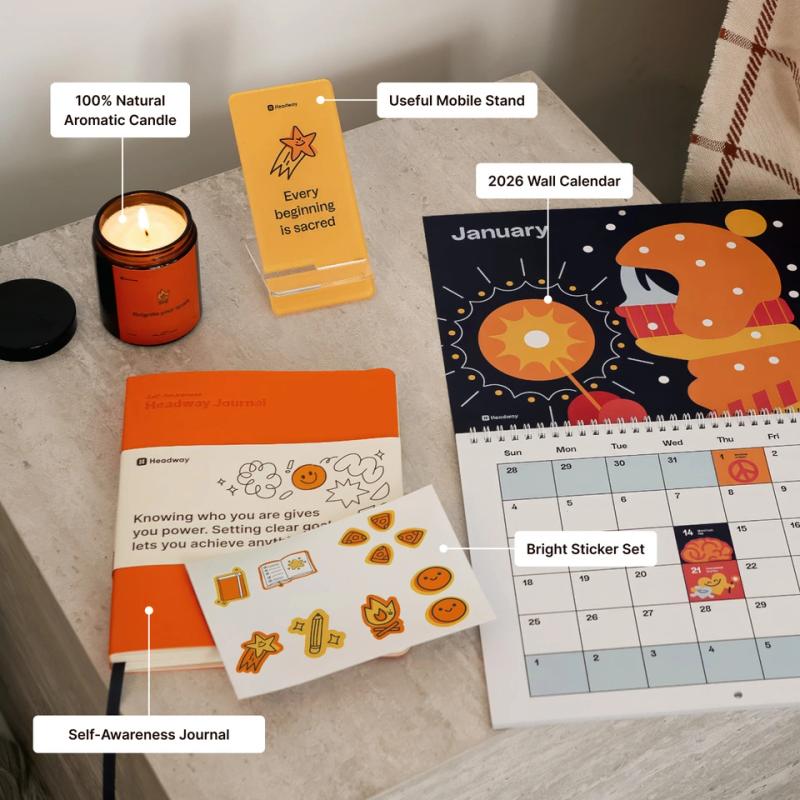
That is the part I like about the product. It does not ask you to adopt a complicated philosophy before you begin. You can open the journal, answer one prompt, review the week, or track a habit without turning the whole thing into an operating system.
The phone stand and candle could easily feel gimmicky in another bundle. Here they make sense because they support the behavior the kit is trying to encourage: put the phone somewhere else, slow down for a few minutes, write by hand.
The daily experience
The best use case is not a long, dramatic journaling session. It is a short pause.
Some days that might mean using the weekly planner to sort priorities. Other days it might mean answering a self-awareness prompt at night, when you are trying to understand why the day felt heavier than expected.
The habit tracker is useful because it makes consistency visible without turning the whole exercise into a scoreboard. That distinction matters. A lot of productivity systems quietly become another way to judge yourself. A good journal should help you notice what is happening, not punish you for missing a day.
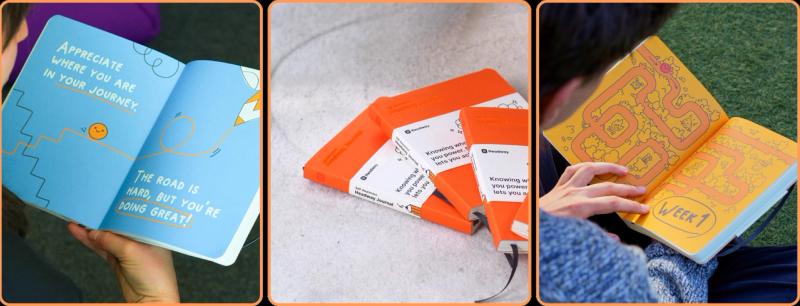
The physical format helps here. Writing by hand is slower than typing, but that is part of the value. It gives your thoughts a speed limit.
The downside is that structure will not work for everyone. If you already have a strong journaling habit, the prompts may feel too narrow after a while. If you like highly analytical systems with charts, metrics, and detailed dashboards, this will probably feel too soft.
But for people who are tired of elaborate productivity setups, that softness may be the point.
How it compares to productivity apps and blank notebooks
Productivity apps are useful for scheduling, task capture, reminders, and collaboration. I use plenty of digital tools for those jobs. But they rarely create much space for reflection, because they live inside the same environment that creates the noise.
Blank notebooks have the opposite problem. They are flexible, but that freedom can become another decision. What do I write? How much? What format? Is this supposed to be useful, creative, emotional, strategic?
Guided journaling lands between those two. It is less flexible than a blank notebook, but easier to start. It is less powerful than a productivity app, but also less distracting.
That makes the Headway kit a decent fit for people who want a physical routine without building a whole bullet-journal system from scratch. It gives enough structure to lower resistance while still leaving room for personal reflection.
Who this will probably help most
This kit is probably best for:
- people who want to start journaling but freeze on a blank page
- busy professionals who want a short screen-free routine
- people recovering from productivity overload or burnout
- anyone trying to rebuild consistency after abandoning digital systems
- readers who want reflection and planning in the same physical setup
It is probably not ideal for people who already love unstructured journaling, or for people who want a highly analytical productivity dashboard.
That seems like the right dividing line. If you want total freedom, buy a notebook. If you want automation and reminders, use an app. If you want a gentle structure that makes reflection easier to begin, guided journaling is worth trying.
Final thoughts
Most people do not need another productivity hack. They need less mental noise.
That is the strongest case for guided journaling. It creates a small pocket of quiet inside a routine that probably has too many inputs already. The Headway kit works because it treats productivity and self-awareness as connected. You plan the week, but you also pay attention to why the week feels the way it does.
No journal will make someone focused, calm, and consistent overnight. Real change still depends on repetition and honesty.
But a good prompt can make the next five minutes easier. Sometimes that is enough to keep the habit alive.