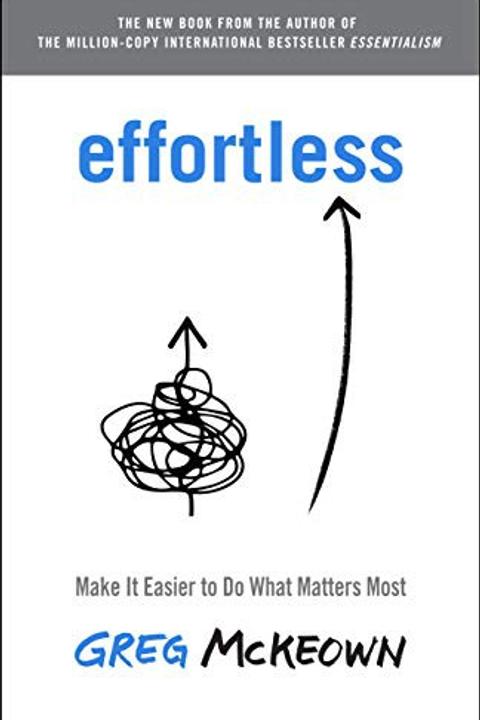
Effortless by Greg Mckeown: Summary & Notes
by Greg Mckeown
In one sentence
After Essentialism teaches what to focus on, Effortless shows how to make the essential easier—not through more effort, but through better approaches that reduce friction.
Key takeaways
- Make essential work easier, not just more disciplined
- Effortless State: be physically and mentally rested
- Effortless Action: simplify, focus on MVP, don't overthink
- Effortless Results: automate, delegate, create leverage
- Invert: ask "What would this look like if it were easy?"
- Progress beats perfection—done is better than debating
Summary
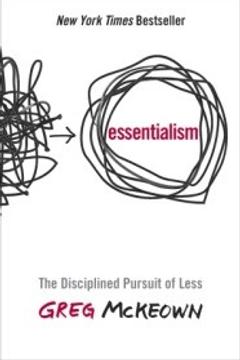
Essentialism was one of my favourite reads of the past couple years, so I had high expectations for Greg's second book.
Unfortunately, I was disappointed.
The book might be more meaningful for those unfamiliar with a lot of the principles, but I failed to find much that was new.
The good news is that it's a fast read.
You can skip straight to the summary he provides at the end of each of the three parts.
You can also listen to this podcast and get most of the key concepts.
Who should read this
- Essentialism readers who still feel overwhelmed
- High achievers who rely on willpower
- Burned-out overachievers
- Anyone who makes things harder than necessary
FAQ
What is the difference between Essentialism and Effortless?
Essentialism is about what to focus on (eliminating the non-essential). Effortless is about how to make essential work easier. The first book teaches selectivity; the second teaches simplicity and leverage.
Detailed Notes
Click to expand the full detailed notes →
Detailed Notes
Click to expand the full detailed notes →
Notes
Part I: Effortless State
- The Effortless State is an experience many of us have had when we are physically rested, emotionally unburdened, and mentally energized.
- Essentialism was about doing the right things; Effortless is about doing them in the right way.
- Effortless Inversion means looking at problems from the opposite perspective. It means asking, “What if this could be easy?”
- There is power in pairing our most enjoyable activities with our most essential ones.
- Rituals are similar to habits in the sense that “when I do X, I also do Y.” But they are different from habits because of one key component: the psychological satisfaction you experience when you do them. Habits explain “what” you do, but rituals are about “how” you do it.
- When you focus on what you lack, you lose what you have. When you focus on what you have, you get what you lack.
- Use this habit recipe: “Each time I complain I will say something I am thankful for."
Part II: Effortless Action
- Effortless Action means accomplishing more by trying less. You stop procrastinating and take the first obvious step.
- If you want to make something hard, indeed truly impossible, to complete, all you have to do is make the end goal as vague as possible.
- In recent years neuroscientists and psychologists have found that the “now” we experience lasts only 2.5 seconds. Two and a half seconds is enough time to shift our focus: to put the phone down, close the browser, take a deep breath.
- To get started on an essential project, first define what “done” looks like.
- To simplify the process, don’t simplify the steps: simply remove them.
- Maximize the steps not taken.
- When you start a project, start with rubbish.
- Set an effortless pace: slow is smooth, smooth is fast.
- Create the right range: I will never do less than X, never more than Y.
Part III: Effortless Results
- This is what it means to achieve Effortless Results: not to achieve a result once through intense effort, but to effortlessly achieve a result again and again.
- Understand first principles deeply and then apply them again and again.
- Read books. It's one of the highest leverage activities out there.
- To learn, teach.
- Use checklists to make sure you don't miss things.
- Automate as many essential tasks as possible.
- You always have a choice: in each moment, you can choose the "heavier path" or the "lighter path."
- Life doesn't have to be as hard or complicated as we make it. We can always look for the simpler, easier path.