My Simple Diet & Exercise Plan That Lost Me 9 Pounds in 30 Days
I lost 9 pounds in 30 days with a simple 2,000 calorie diet and 10,000+ daily steps on a walking pad. Here's the exact plan, meals, and tracking setup.
 ByGraham Mann9-min read
I've been interested in health and fitness for as long as I can remember.
Growing up, I played every sport I could. Hockey, golf, soccer, whatever was in season. In my twenties, I cycled through lifting phases, running phases, boxing, all kinds of things. Fitness has always been part of my identity, even when life is busy.
But I'm not immune to the fluctuations. Like most people, I drift. The holidays hit. Work gets busy. The gym membership goes unused. And then one day you step on the scale and realize you've drifted further than you thought.
That's where I was at the start of January: 93.7 kg (206 lbs). Not my worst, but not where I wanted to be. Especially with a longer-term goal of getting under 15% body fat.
There's also something else in the background. Heart disease runs in my family. I've watched it affect people I love. And while I can't control my genetics, I can control how proactive I am about the things that matter: body composition, metabolic health, staying active.
For my own sanity, for how I feel about myself, and for the long game, I need to be healthy.
So I decided to tighten things up. Not an overhaul. Just a few small changes.
30 days later: 89.7 kg (198 lbs). Body fat down ~2%.
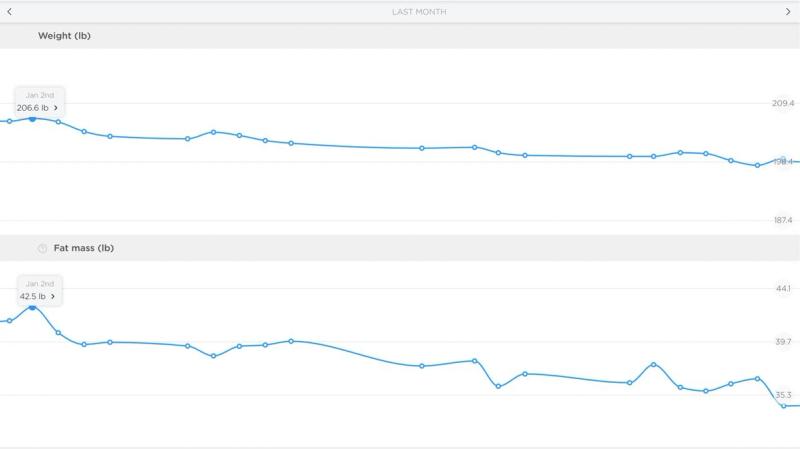
Here's exactly what I did.
Figuring Out Your Calorie Target
Before changing anything, I needed a number to aim for. Not a guess. An actual target.
Here's the rough formula I used:
Bodyweight in lbs × 12 = approximate maintenance calories (sedentary).
For me at ~200 lbs, that's about 2,400 calories just existing. Add in 10,000+ steps a day from walking, and my real maintenance was probably closer to 2,800-3,000.
To lose fat at a reasonable pace, you want to eat 500-750 calories below maintenance. That puts you at about 1-1.5 lbs of fat loss per week. Aggressive enough to see real results but not so aggressive that you feel like garbage.
I went with 2,000 calories a day. That's roughly a 800-1,000 calorie deficit with the walking factored in. On the aggressive side, but I wanted faster results and I knew I could handle it for 30 days. I've also tried this kind of thing before and found that I'm better around this kind of target in terms of seeing results.
It also means I have a little wiggle room if I end up snacking more than planned or am out for a meal or something.
For macros, I targeted:
- Protein: 180-200g (this is the one that matters most)
- Fat: 60-80g (enough to keep hormones functioning)
- Carbs: Whatever's left after hitting protein and fat
I used Grok to help me dial this in. Plugged in my stats, told it what I was already eating, and asked it to build me a plan. More on that below.
The Diet (Minimal Changes)
I already ate reasonably well. Protein shakes in the morning, eggs and spinach for lunch, chicken and veggies for dinner. The main issues were snacking and a few carb-heavy choices.
What I Changed
Breakfast: Swapped toast with peanut butter for overnight oats. Oats, cinnamon, a splash of milk, whey protein, and mixed berries. Easy to prep, keeps me full until lunch.
Lunch: Kept the eggs and spinach. Added variety with avocado, olives, and hot peppers.
Dinner: Stuck with protein + vegetables (chicken, bean salads, Greek-style dishes). Cut out most bread.
Snacking: Basically eliminated it. This was probably the biggest lever. If I did snack, it was carrots + hummus, or an apple with cinnamon (no longer peanut butter).
That's it. I used Grok to sanity-check my existing diet and it confirmed I just needed minor tweaks, not a total rebuild.
My Actual 2,000 Calorie Meal Plan
After figuring out my calorie target, I asked Grok to build me a full day of eating around 2,000 calories with 180+ grams of protein. Here's what it came back with:
| Meal | What I Eat | Calories | Protein | Carbs | Fat |
|---|---|---|---|---|---|
| Wake-up Shake | Whey protein + water + 5g creatine | 130 | 25g | 3g | 1g |
| Breakfast | 3 eggs + spinach or broccoli + olive oil | 350 | 25g | 5g | 25g |
| Lunch | 200g chicken breast + mixed vegetables + rice (small) | 480 | 50g | 35g | 8g |
| Afternoon Snack | Greek yogurt (0% fat) + casein protein | 250 | 40g | 15g | 2g |
| Dinner | 200g white fish (cod/tilapia) + roasted vegetables | 350 | 42g | 15g | 5g |
| Evening | Overnight oats (prep for next day, eat ~half) | 250 | 15g | 35g | 7g |
| Daily Total | ~1,810 | ~197g | ~108g | ~48g |
That leaves about 190 calories of buffer for cooking oils, sauces, or a small snack. In practice I usually landed somewhere between 1,800 and 2,100.
I didn't follow this rigidly every single day. Some days I'd swap the fish for chicken, or skip the evening oats if I wasn't hungry. The point was having a template so I never had to think about what to eat.
The Walking Game-Changer
The other half of the equation: walking at least 10,000 steps a day.
I know, everyone says this. And apparently it's not that scientific. But it does make a big difference, and the unlock for me was getting a walking pad for my desk.
I spend a lot of time working at a computer. With a walking pad underneath, I can rack up 12,000-16,000 steps without thinking about it. No dedicated workout time required. Just walk while you work.
There's a big difference between the days when I did this vs. the days when I didn't. Sounds silly, but I can almost feel the fat loss on the days I'm walking that much.
A Few Notes on Walking Pads
Most of them are pretty similar. If I were buying one today, I'd look for:
- Incline capability — would make it more of a workout and potentially speed up fat loss
- Higher weight capacity — so you could wear a weighted vest if you wanted to level up
- Brushless motor — funny enough, after drafting this post, mine failed. The motor seized up. Brushless is known to be more robust.
One thing I discovered: my Garmin watch and WHOOP both struggle to count steps when you're walking in place. The movement pattern is different from actual walking. I switched to a Garmin HRM Pro Plus chest strap, which tracks steps accurately even on a walking pad. Solved the problem completely. The newer Garmin HRM 600 is supposed to do the same thing and is what I'd buy today.
Though you can make the Garmin watch and/or WHOOP work: you just need to put them against your hip (tucked in waistband) touching your skin so that they're still measuring heart rate. Just putting them in my pocket didn't work.
Tracking & Feedback Loops
Having data made this way more motivating. When you see the numbers trending down, you want to keep going.
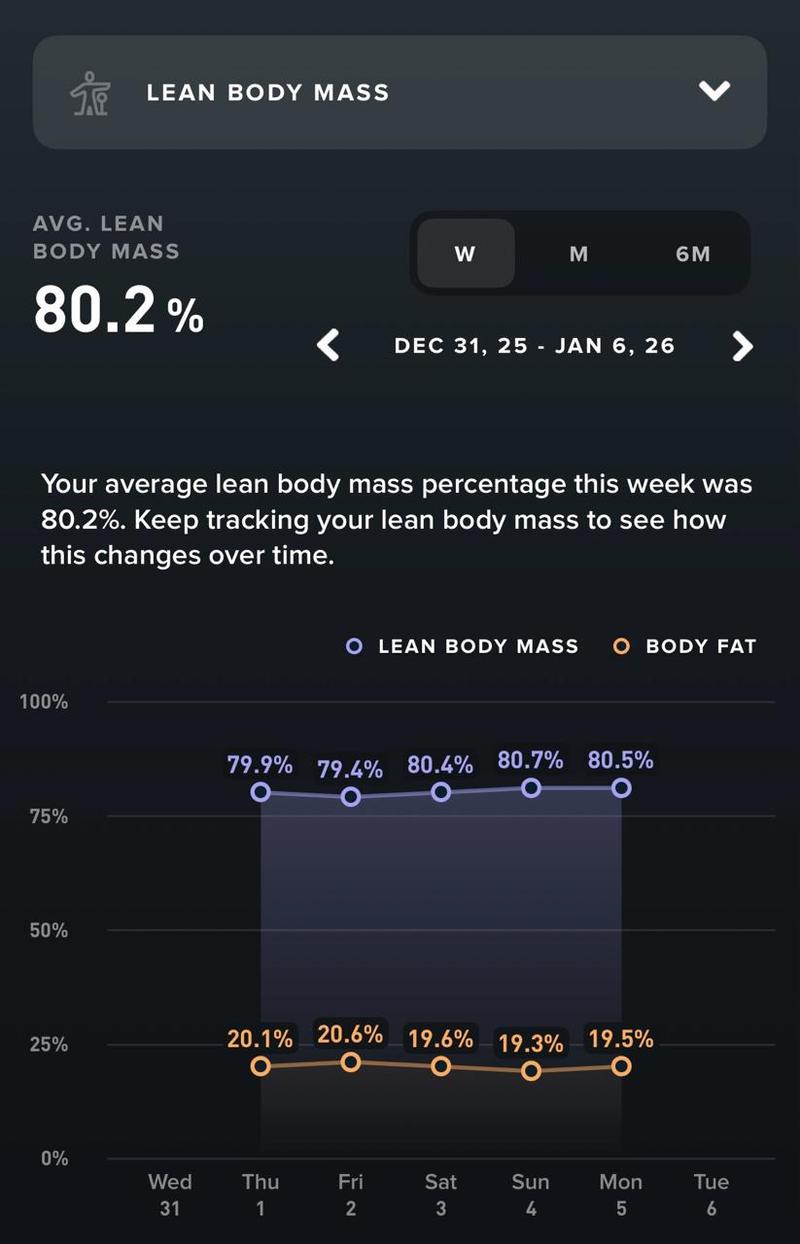
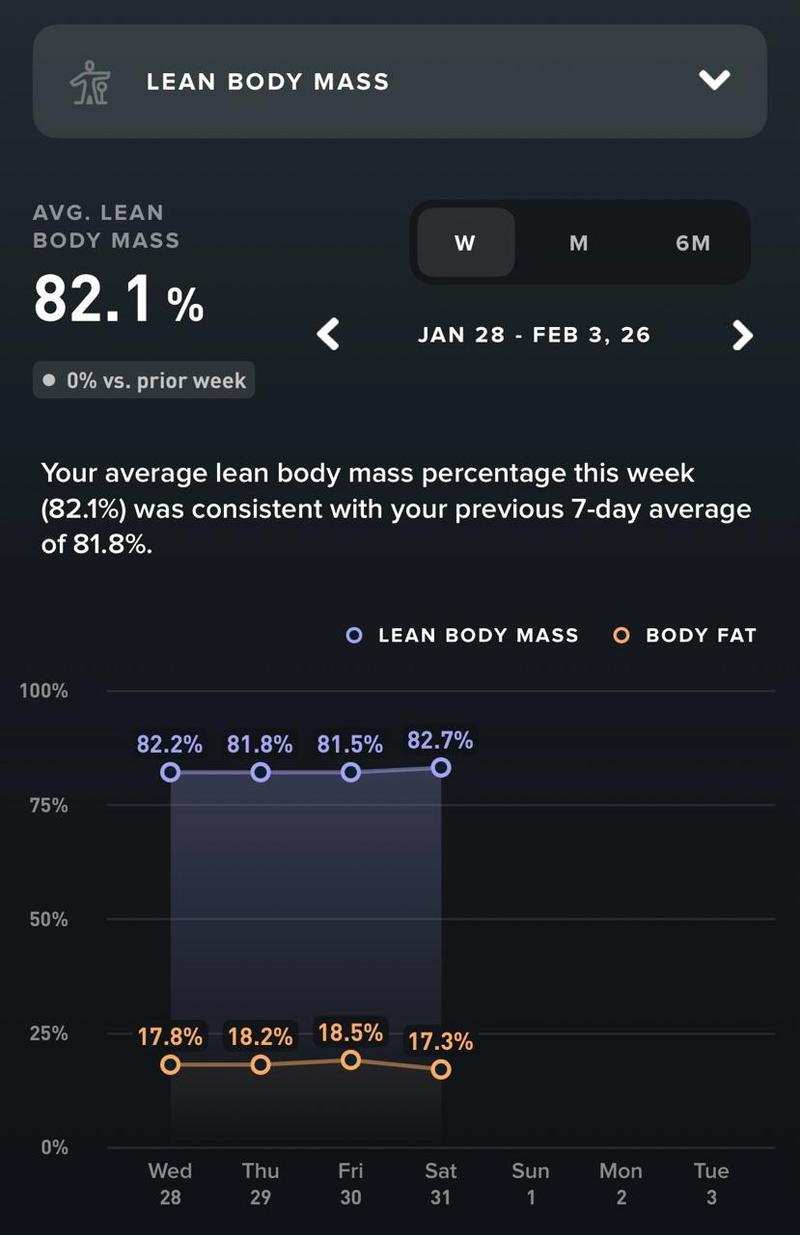
I picked up a Withings Body Smart scale for weight and body fat percentage. These aren't lab-accurate, but I compared mine to a DEXA scan and it was close enough. More importantly, the trends are reliable. (There's also a cheaper option with solid reviews if you don't need all the extras.)
Data syncs automatically to WHOOP and Garmin, so I can see everything in one place.
Given my family history, I pay attention to more than just weight.
I track my metabolic health, get bloodwork done through SiPhox Health (use code GRAHAM769222 for 25% off), and try to stay ahead of potential issues rather than reacting to them. The scale is just one data point in a bigger picture.
Supplements
Nothing fancy here:
Morning:
- Whey protein + 5g creatine (mixed with water)
Evening:
- 2+ omega-3 capsules
- 5,000 IU vitamin D (I've tested multiple times and this keeps me in the normal range. I'm in Canada, so winter sun isn't doing much.)
- Magnesium (noticeably improves my sleep based on WHOOP data)
One note: I've been using plant-based protein powder, but I'm planning to switch back to whey. Some recent studies have raised concerns about heavy metals in plant-based options.
What About the Gym?
This month didn't include any strength training. I was rehabbing a minor injury and decided to focus purely on the diet and walking.
That said, I'm a big believer that strength training is crucial for longevity, especially as you get older. I started back at the gym last week and plan to layer that in going forward.
But the point is: you don't need the gym or crazy workouts to see meaningful results. Diet + walking got me 9 pounds in 30 days.
Realistic Fat Loss Guidelines
A few things I've learned (some from experience, some from reading too much about this stuff):
1-1.5 lbs per week is the sweet spot. That's 0.5-0.7 kg. Anything faster and you're probably losing muscle too. Anything slower and it's hard to stay motivated. Aim for that range and be patient.
Protein is non-negotiable. I shoot for at least 1g per pound of bodyweight. At 200 lbs, that's 200g of protein a day. It sounds like a lot until you build your meals around it. Without enough protein, your body pulls from muscle instead of fat. That's the opposite of what you want.
Week 1 is misleading. I lost almost 4 lbs in the first week. Most of that was water weight from cutting carbs and cleaning up my diet. The real fat loss showed up in weeks 2-4 at a much steadier pace. If you see a big drop early and then it slows down, that's normal. Don't get discouraged.
Track trends, not daily numbers. My weight bounces around 2-4 lbs on any given day depending on water, sodium, sleep, stress. I weigh myself every morning but only look at the weekly average. The Withings/WHOOP app makes this easy.
If you start feeling terrible, eat more. After 3-4 weeks at a deficit, some people hit a wall. Energy crashes, mood drops, workouts suffer. If that happens, bump calories up 300-400 for a week. It's not failure. It's maintenance. Then go back to the deficit when you feel ready.
The Bottom Line
There's an old saying: abs are made in the kitchen. It's cliché because it's true.
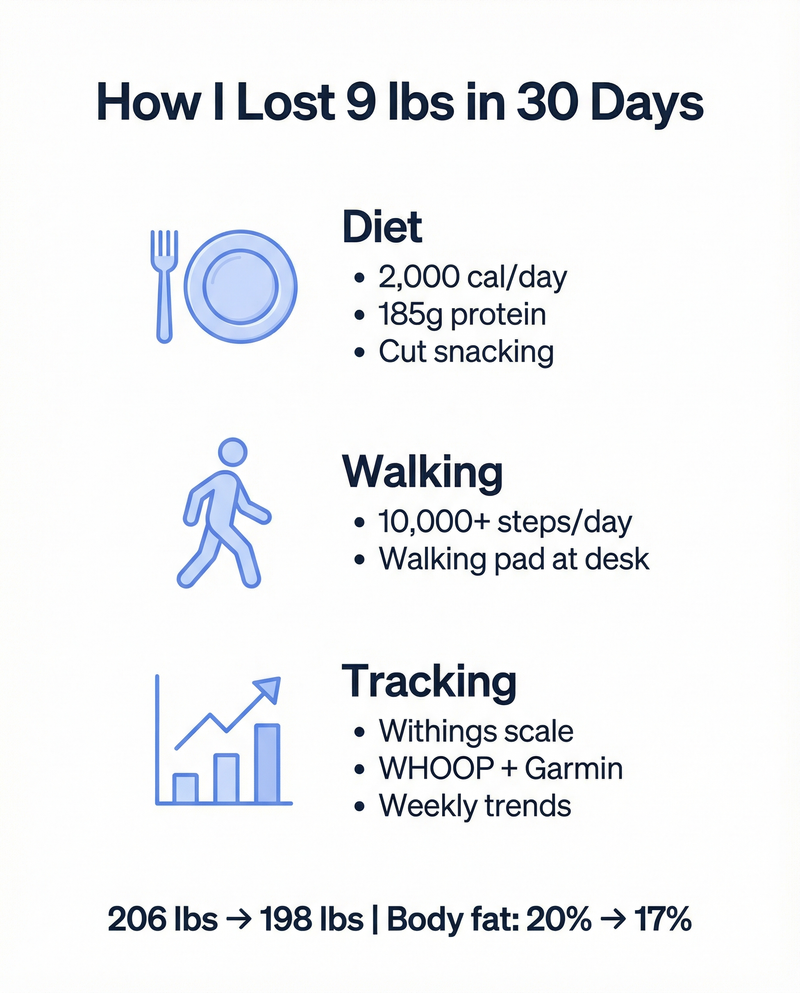
I've been doing this long enough to know that complexity doesn't help. The best system is the one you'll actually follow. For me, that meant:
- Figure out your calorie target (bodyweight × 12, subtract 500-750)
- Minor diet tweaks (swap one meal, cut snacking, hit protein)
- Walk 10K+ steps daily (walking pad at desk is a cheat code)
- Track progress (scale + wearables)
I still feel full. I haven't been hungry or miserable. And I've lost 9 pounds in a month.
The best part? This is a foundation you can build on. Add strength training, cycling, running, whatever you want. But start with the basics. They work.
And if you've got reasons beyond vanity — family history, long-term performance, just wanting to feel like yourself again — that's the motivation that sticks.
My Setup (Links)
- Walking pad: Brushless walking pad (any similar brushless model should work fine)
- Garmin HRM 600 chest strap: Amazon (tracks steps accurately on a walking pad)
- Withings Body Smart scale: Amazon (cheaper option with good reviews: here)
- Gold Standard Whey protein: Amazon
- WHOOP: Get a free WHOOP + one month free
- SiPhox Health (at-home blood testing): 25% off with code GRAHAM769222
What's your simple health hack that actually works? Reply and let me know.