Best Books for Clear Thinking and Better Decisions
Our lives are one big series of decisions, which can propel us forward or set us back. Like investing, good decision-making compounds, giving us interest on our past choices. Which is why learning to think clearly and make better decisions is so important. These are the books that have helped me most.
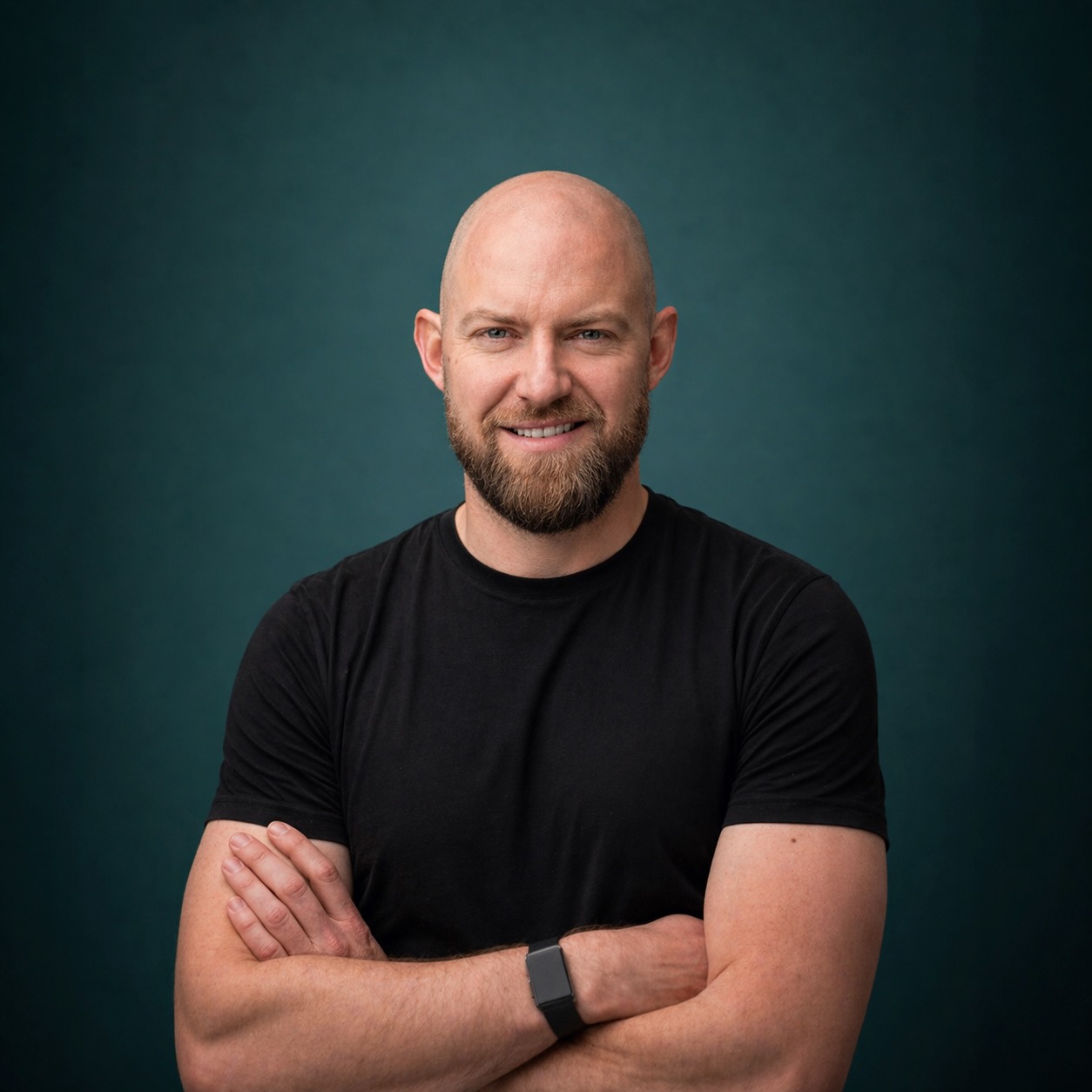 ByGraham Mann7-min read
Most of the problems we face in life aren’t caused by bad luck. They’re caused by unclear thinking—rushed choices, emotional reactions, or assumptions we never questioned.
Clear thinking doesn’t guarantee perfect outcomes.
But it dramatically reduces avoidable mistakes, improves judgment, and makes you more resilient in the face of uncertainty.
Books have been one of the most reliable ways I’ve improved my ability to think.
They give you new models, new perspectives, and new ways of understanding the world.
The books below aren’t an academic list of “must-reads.” They’re the ones that actually changed how I make decisions.
The Core Books That Improved My Thinking the Most
Antifragile — Nassim Nicholas Taleb
If I had to pick one book that changed how I think about the world—and how I run my life—it would be Antifragile.
Taleb’s core idea is that many things in life follow power laws: a small number of actions drive most of the outcomes.
Once you understand that, decisions look different.
It’s the reason quitting a well-paying job can make sense in the long run. A stable paycheck feels safe, but it caps your upside. Personal projects, entrepreneurship, or asymmetric opportunities may feel risky, but they can fundamentally change your life if even one of them pays off.
Power laws helped me see that staying in a comfortable job for too long had hidden downsides.
It’s part of why I quit my job in August—not because it was a bad job, but because the long-term payoff of an asymmetric bet was far greater than the predictable path.
Antifragile thinking also influences how I invest, how I manage risk, and how I design my lifestyle. I reread it every year because the ideas keep proving themselves useful.
Thinking, Fast and Slow — Daniel Kahneman
This is the clearest explanation of how our brains stumble when making decisions.
Kahneman introduces two systems:
- System 1: fast, intuitive, emotional
- System 2: slow, deliberate, analytical
Most of our mistakes come from relying on System 1 in situations where we need System 2.
Confirmation bias, sunk cost fallacy, overconfidence—just understanding these concepts changes your behavior.
You start noticing when you’re arguing to defend a belief rather than seeking truth.
You catch yourself wanting to continue a project just because you’ve invested time, not because it still makes sense.
I don’t think biases ever go away.
But knowing they exist helps you correct for them.
The Art of Thinking Clearly — Rolf Dobelli
This is the simplest, most accessible catalog of cognitive errors.
Each chapter is a quick explanation of a common thinking trap, and you can read the book in any order.
I use it as a reference when I catch myself slipping into emotional reasoning or reacting too quickly to a situation.
It’s a reminder that errors in thinking don’t mean anything is wrong with you—they’re just part of being human.
The Psychology of Money — Morgan Housel
Money decisions are rarely about math. They’re about behavior.
This book helped me understand my own relationship with money—how I think about risk, what “enough” means, and why long-term patience is one of the strongest financial strategies.
It changed my perspective on money from something to optimize to something to understand.
It’s also one of the easiest books to recommend because the ideas are immediately applicable.
The Obstacle Is the Way — Ryan Holiday
Stoicism is one of the best tools for clear thinking under pressure.
Holiday’s writing makes ancient philosophy usable in the modern world.
The idea that “the obstacle is the way” helps reframe problems as the path forward rather than something to avoid.
Whenever I hit a difficult moment—building something new, making a tough decision, navigating uncertainty—this book brings me back to a calmer, more rational mindset.
Books That Improve Judgment, Perspective, and Long-Term Thinking
Range — David Epstein
Range argues that generalists—not specialists—are often better at solving complex problems. Generalist thinking lets you pull ideas from one field and apply them somewhere completely different.
This has shaped how I work across domains: tech, business, health, writing, construction. It reminds me that pulling from different experiences isn’t a weakness—it’s a strength.
The Rational Optimist — Matt Ridley
A grounded, historical case for optimism.
This book helps counteract the negativity bias that dominates modern life. When you understand how often the world has improved—and why—it becomes easier to make long-term decisions from a place of calm rather than fear.
Sapiens — Yuval Noah Harari
Understanding human nature makes you better at predicting behavior—your own and others’.
Sapiens gives you the deep context behind why we think the way we do and why some of our mental patterns persist even when they no longer serve us.
It’s one of the few books that genuinely changes how you see the world.
Poor Charlie’s Almanack — Charlie Munger
A dense, wide-ranging guide to thinking clearly. Munger’s philosophy is built on combining mental models from multiple disciplines—economics, psychology, engineering, biology—to arrive at better decisions.
It’s not a book you breeze through. It’s a book you study.
Superforecasting — Philip Tetlock
The best book ever written about making accurate predictions.
Superforecasters aren’t smarter than everyone else—they’re more disciplined. They update their beliefs as new information arrives, they quantify uncertainty, and they avoid overconfidence.
Even adopting one or two of their habits makes decision-making more grounded.
Books That Help You See the World as It Actually Is
The Black Swan — Nassim Taleb
We’re terrible at predicting rare events, yet rare events often shape our lives more than anything else.
This book helps you see the danger of planning around “average” scenarios and the importance of protecting yourself against ruin. It’s uncomfortable, but it’s essential.
Fooled by Randomness — Nassim Taleb
This book made me far more skeptical of simple stories applied to complex outcomes. It’s easy to confuse luck for skill—or skill for luck. Understanding the difference helps you avoid false lessons and base your decisions on reality rather than narratives.
Meditations — Marcus Aurelius
Clear thinking often requires quiet, space, and emotional distance.
Meditations is a timeless reminder that we can choose our responses, even when we can't choose our circumstances.
Siddhartha — Hermann Hesse
The most grounding book I’ve ever read.
Whenever I’m overwhelmed—questioning decisions, doubting myself, or feeling anxious—I return to one line:
“I can think, I can wait, I can fast.”
It’s a reminder that you don’t need much.
You can start again.
You can rebuild.
You are capable of more than you think.
This perspective helped a lot when I quit my job and stepped into uncertainty.
Returning to zero is uncomfortable, but it’s rarely the catastrophe we imagine.
My Biggest Lessons About Clear Thinking
The most useful idea I’ve learned is that a great decision-making process can still lead to a bad outcome—and a bad process can sometimes produce a good one.
That doesn’t mean the process is irrelevant. It means probability governs more of life than we like to admit.
If a decision has an 80% chance of success, it will fail 20% of the time. That doesn’t mean it was the wrong decision—it just means you’re living in the real world.
Thinking clearly is about getting the process right:
- understanding your biases
- recognizing power laws
- reducing downside
- giving yourself exposure to upside
- slowing down when things feel urgent
- accepting uncertainty
The outcome will take care of itself.
The Great Mental Models — Shane Parrish
Less one big idea, more a full toolkit — inversion, first principles, circle of competence, each one a different lens for the same decision.
It's less a book to read once than a reference to keep coming back to when a decision doesn't fit the models you already reach for.
The Undoing Project — Michael Lewis
The story behind Thinking, Fast and Slow — how Kahneman and Tversky actually arrived at System 1 and System 2, and how their partnership worked (and eventually frayed).
Reading it after Kahneman's own book makes the ideas land differently — you see the arguments and disagreements that produced them, not just the tidy conclusions.
How to Use These Books in Your Own Life
Here’s the simple method I use:
- Read slowly. Pay attention to what resonates.
- Highlight the ideas you keep returning to. Those are the ones that matter.
- Test one idea immediately. A small behavior change is worth more than pages of notes.
- Revisit the important books yearly. They change as you do.
- Focus on the process. Clear thinking is a habit, not a single insight.
Books don’t change your life.
But the ideas you apply do.
If you want my full notes…
You can find all my book notes here on my site—summaries, takeaways, and the ideas I’m actively using right now.