Best Books for Building a Better Life (My Shortlist)
A good life isn't built from hacks or breakthroughs. It's built from the ideas you keep returning to. These are the books that shaped how I think about health, wealth, and wisdom.
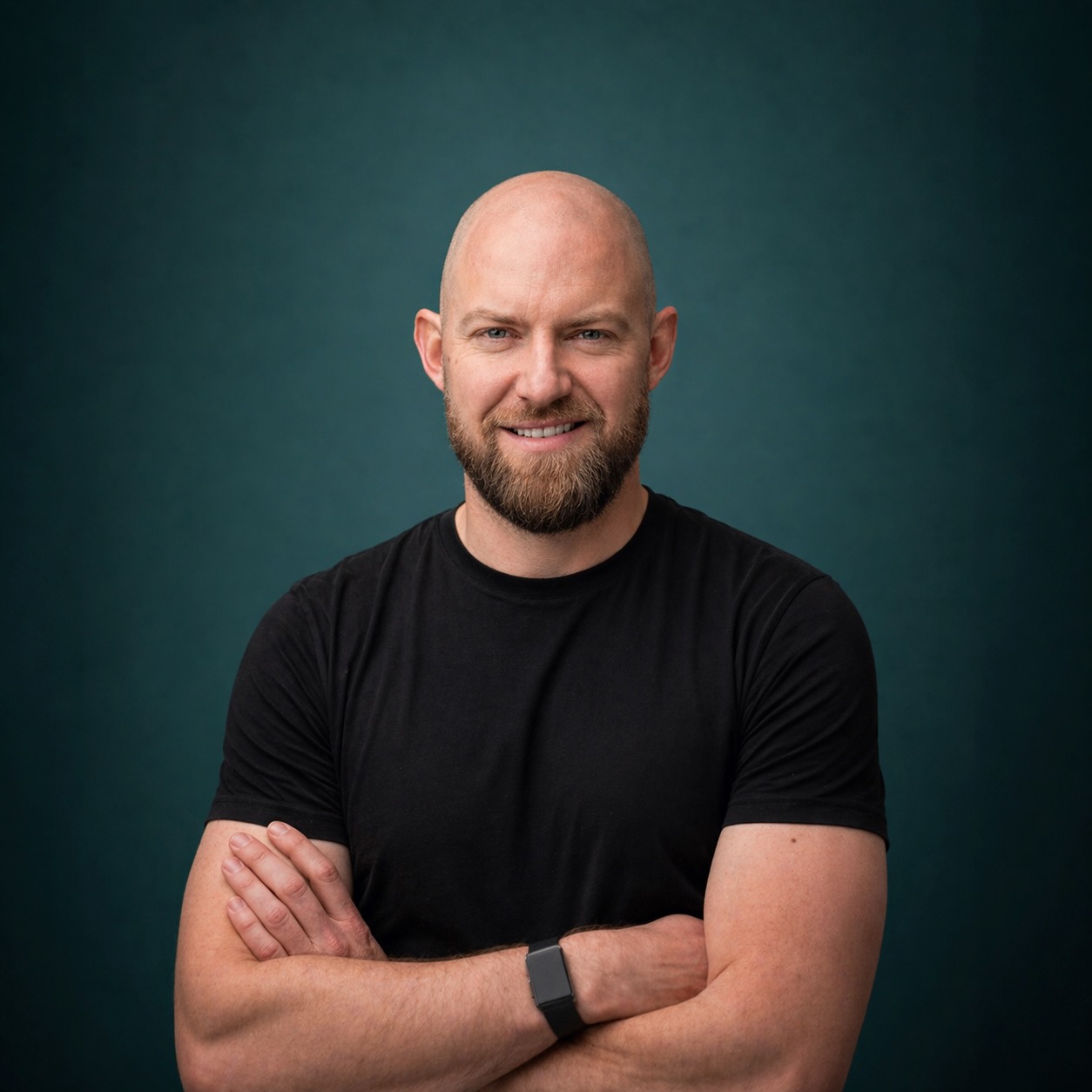 ByGraham Mann8-min read
A good life isn't built from hacks or breakthroughs. It's built from the ideas you keep returning to—ideas that quietly shape how you think, how you work, and what you choose to do with your time.
These are the books that have done that for me. Not the "top 100 bestsellers." Not the "books everyone should read before they die."
Just the ones that helped me build a healthier, wealthier, and wiser life—and the ones I still think about years later.
To organize them, I'm borrowing a simple framework from Tim Ferriss: Healthy, Wealthy, and Wise. A good life tends to require a mix of all three.
Healthy: Books That Build a Strong Foundation
Most people only think about their health when they lose it. But everything else in life sits on top of this foundation: energy, mood, longevity, and the ability to do the things you care about.
Only one book truly belongs in this category for me.
Outlive — Peter Attia
This book clarified longevity in a way that instantly changed my behavior.
It reinforced two things I already knew—but didn't fully appreciate:
- Strength is a form of insurance.
- VO2 max is one of the strongest predictors of long-term health.
I had been training already, but Outlive made it clear why it mattered and what to prioritize. It also pushed me to run proper blood tests, understand my genetics, and figure out the few things I actually needed to adjust in my diet and training environment.
The biggest motivation for me is simple: When you're sick, you only want one thing. When you're healthy, you want everything.
And I want to be healthy for a long time—long enough to live a full life, see future kids grow up, stay active, and keep doing things I love without constant physical limitations.
Optional add-on: The 4-Hour Body is chaotic and imperfect, but it was the first book that made me question conventional health advice and experiment for myself.
Wealthy: Books That Expand Your Options
Money isn't the purpose of life, but it makes nearly everything easier. More importantly, it buys the two things that matter most:
- time, and
- freedom.
These books helped me rethink career paths, business building, optionality, and investing.
The 4-Hour Workweek — Tim Ferriss
This is the book I always return to.
Not because everything in it is perfect, but because it completely rewired how I see work, freedom, and entrepreneurship.
Before reading it, I thought the only real entrepreneurial path was building a massive startup. Ferriss opened the door to something different: the idea that you can design a life around what you value, not what society expects.
It showed me that you can build a business with a non-linear relationship between time and money. That you can travel, spend more time with people you love, and build a life that fits you instead of one you have to squeeze yourself into.
It's still the book I recommend most often.
Just Keep Buying — Nick Maggiulli
A simple, refreshing framework for building wealth.
It clears away 95% of the noise around investing—timing the market, obsessing over stock picks, wondering whether you're doing "enough." The answer, as the title suggests, is largely: stay the course.
It's both a reminder and a roadmap. Great for beginners. Still useful for experienced investors.
The Million-Dollar, One-Person Business — Elaine Pofeldt
A book full of examples that expand your sense of what's possible.
It shifted my mindset from "entrepreneurship = huge startup" to "a small, focused business can create a great life." Some books inspire. This one gives you permission.
Million Dollar Weekend — Noah Kagan
Momentum. Speed. Action.
This book is about lowering the psychological barrier to starting something. It reminds you that you don't need a perfect idea, a perfect plan, or a perfect moment—you need motion.
Tools of Titans — Tim Ferriss
A library of useful ideas. It's not a book you read once—it's one you dip into when you need something specific.
One idea I still use from it is fasting. But really, Tools of Titans is less about specific tactics and more about exposure to people who think differently.
Mastery — Robert Greene
One of the few books that explains what skill actually requires.
It made me understand that becoming great at anything is a long, uneven journey. Mastery reframes expectations. It helps you be patient with slow progress and deliberate with practice.
Steal Like an Artist — Austin Kleon
This book gave me permission to stop obsessing over originality.
Everything is a remix. You learn by borrowing, experimenting, and slowly finding your own style. It's a great book for anyone who creates, writes, or makes things on the internet.
Traction — Gabriel Weinberg & Justin Mares
The clearest explanation I have found of the actual work behind getting traction — the Bullseye Framework for testing distribution channels systematically instead of guessing.
A good corrective for the instinct to keep improving the product instead of finding out whether anyone actually wants it.
Wise: Books That Improve Your Thinking and Reduce Mistakes
Wisdom is about avoiding ruin, thinking clearly, and navigating life without unnecessary suffering. Most of the books that changed me the most sit in this category.
Antifragile — Nassim Nicholas Taleb
The most influential book I've ever read.
The core idea is simple: Expose yourself to positive non-linearities and avoid negative ones.
Many real-world opportunities follow power laws. Some decisions can't hurt you much but can help you enormously. Others can help a bit but destroy you completely.
This book influenced nearly every major choice in my career:
- why I pursued tech
- why I started creating things online
- why I left a traditional career path
- why I structure my finances the way I do
I reread it every year because the ideas keep getting more relevant.
The Obstacle Is the Way — Ryan Holiday
A modern interpretation of Stoicism.
Holiday's talent is showing how ancient principles apply to modern problems. The idea is simple: the thing that slows you down or causes friction is often the thing you need to move through, not around.
Whenever I hit a difficult patch—personally or professionally—this book helps me see the challenge more clearly.
The Art of a Good Life — Rolf Dobelli
A collection of mental models for a calmer, clearer life.
There's no single big idea here—just dozens of helpful tools you can revisit anytime. I find something new every time I come back to it.
Siddhartha — Hermann Hesse
A short, beautiful book about simplicity, patience, and perspective.
The line I always return to is:
"I can think, I can wait, I can fast."
It's a reminder that you can always return to the basics. No matter what's happening in life, you can reflect, be patient, and simplify.
Turning Pro — Steven Pressfield
Switching from "I hope this works" to "I show up either way."
Identity-level discipline. Very short. Very direct.
The War of Art — Steven Pressfield
The best book ever written about creative resistance.
If you've ever put something off—not because it's hard, but because it matters—this book explains why.
The Rational Optimist — Matt Ridley
A grounded case for optimism.
When the world feels chaotic, this book reminds you that progress is the actual default of human history. It's a helpful counterweight to modern pessimism.
The Great Mental Models — Shane Parrish
A latticework of models instead of one big idea — inversion, first principles, circle of competence.
I keep it around as a reference more than a read-once book — there is usually a model in here for whatever decision is in front of me.
How These Books Changed My Life
These books didn't just give me ideas—they changed how I live.
- Antifragile taught me to seek positive asymmetries and avoid hidden downsides. It influenced my career moves, how I take risk, and how I build things.
- Outlive clarified what matters for long-term health. It helped me train smarter, eat better, and stay proactive instead of reactive.
- The 4-Hour Workweek completely changed my worldview. It opened the door to entrepreneurship and gave me the tools—and confidence—to design my own path.
- Just Keep Buying helped me remove stress around investing and stay focused on long-term habits.
- Mastery, Tools of Titans, Steal Like an Artist, and others gave me principles I still use in daily decisions, creative work, and life design.
- Siddhartha grounds me whenever life feels noisy.
- The Obstacle Is the Way helps me stay steady when things get difficult.
These books shaped my beliefs about work, opportunity, health, risk, and what a good life looks like.
A Belief I Changed Because of These Books
For a long time, I believed in the traditional path—career ladders, stable jobs, predictable systems. These books challenged that.
The 4-Hour Workweek showed me a different kind of life was possible. Antifragile showed me why "safe" paths can be fragile. Atomic Habits reminded me that environment often matters more than discipline.
Together, they taught me to question default assumptions and design a life that fits me, not a template handed to me.
Which Book Should More People Actually Apply?
If I had to choose one: Atomic Habits.
Most people underestimate how much their environment shapes their behavior:
- weights next to the desk
- a walking pad for calls
- living closer to a gym
- fewer cues that trigger bad habits
Design your environment well, and discipline becomes a bonus, not a requirement.
How to Use Books to Build a Better Life
Books only matter if they change what you do tomorrow.
Here's the simple system I follow:
- Read slowly. Pay attention to what resonates.
- Capture the idea. A quote, a principle, a question.
- Test one thing. One habit, one shift, one small experiment.
- Reread the important ones. The books that matter get better with time.
It's not about reading more. It's about rereading the right things.
If you want my full notes…
You can find all my book notes on my site. They're updated regularly, and I link out to the ones mentioned here if you want to go deeper.